
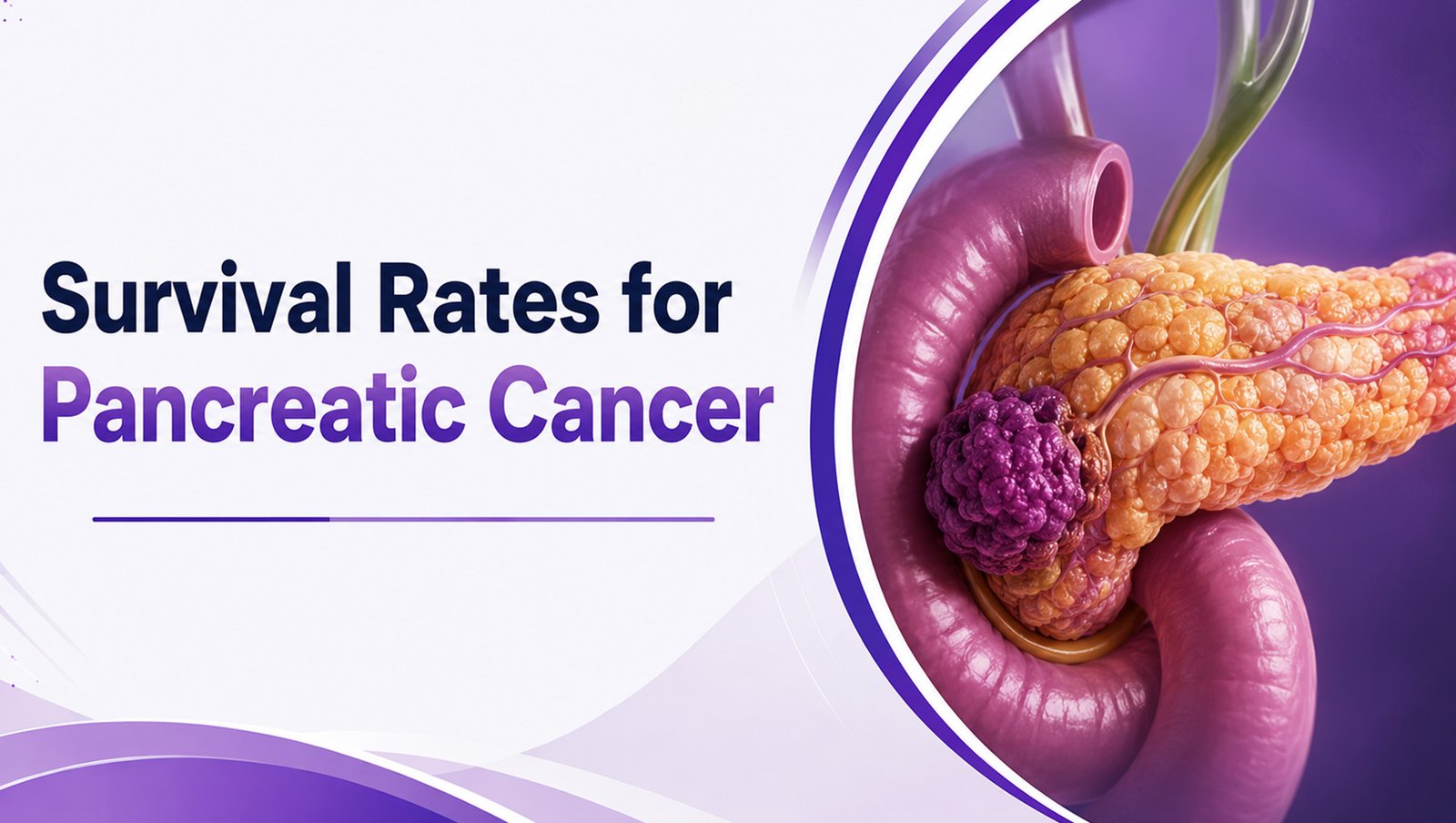
Diagnosis of pancreatic cancer raises many concerns, among which is the question of survival. While understanding the statistics of survival from pancreatic cancer can be helpful, it should not be considered as the prognosis for each patient individually, since several issues affect survival. These include the stage of cancer, a person’s state of health, the effectiveness of treatment methods, and the possibility of performing surgery.
Pancreatic cancer is one of those cancers that still pose many difficulties for the medical field because they are diagnosed at an advanced stage of their development. Nevertheless, with the help of various innovations in surgery, chemotherapy, and targeted treatment options, much progress in treating this disease has been achieved so far.
What Is the Pancreatic Cancer Survival Rate?
The pancreatic cancer survival rate is the percentage of patients who live for a specified time after receiving a diagnosis of the cancer. Doctors typically use five-year rates of survival, which reveal the percentage of patients still alive five years later after being diagnosed.
It is crucial to realize that survival statistics are based upon vast numbers of patients who were treated by the previous doctor. They don't consider the latest advances in treatment or specific elements that could impact the patient's outcomes. Some patients have a longer life span than the standard survival estimates.
Why Is Pancreatic Cancer Often Diagnosed Late?
One reason for the fact that the survival rate for pancreatic cancer is much lower than the survival rate of other cancers is that symptoms typically show up only after the disease has advanced.
Pancreatic cancer that is early in its development may not be a cause of visible symptoms. When symptoms do show up, they could include:
- Abdominal pain
- Back discomfort
- Unexplained weight loss
- Jaundice
- Appetite loss
- Fatigue
Since these signs could be misinterpreted as signs of other illnesses, the diagnosis can be delayed. This is why many patients are diagnosed after they have already spread to the pancreas.
Pancreatic Cancer Survival Rates by Stage
It is very critical to state that the stage of cancer upon diagnosis plays a significant role in the survival rate.
Stage 1 Pancreatic Cancer Survival Rate
A pancreatic carcinoma that reaches Stage 1 means that the disease is confined to the pancreas only without metastasis to the lymph nodes near and other body organs.
This means that it is still possible to treat the cancer effectively. Sometimes, the surgical operation becomes the choice of treatment, while chemotherapy is also an option to reduce the recurrence of the cancer after surgery.
The stage 1 pancreatic cancer survival rate is considerably better than in later stages. As such, the 5-year survival rate can exceed 40% in many cases, provided that the cancer is diagnosed earlier and adequately treated.
Stage 2 Pancreatic Cancer Survival Rate
At this stage, the cancer can have spread to nearby lymph nodes and tissues, but not to distant body organs yet.
Surgery remains one of the ways to treat cancer, provided that it is possible to perform this kind of operation. After surgery, the next step is usually chemotherapy.
Stage 3 Pancreatic Cancer Survival Rate
Stage 3 pancreatic cancer survival rates are often lower because the cancer has already spread into the major blood vessels in and around the pancreas, so surgical removal ends up being more complicated.
People with stage 3 pancreatic cancer might get chemotherapy together with radiation, and in some cases, this combo helps shrink the mass, which can make surgery possible later on.
Even though it gets labeled as locally advanced cancer, there have been recent breakthroughs in treating it, so for some patients, there is genuine hope.
Stage 4 Pancreatic Cancer Survival Rate
In case pancreatic cancer reaches stage 4, the cancer metastasizes into other body parts, including the lungs, liver, or even into the abdominal lining tissue.
During this period, treatment options aim at decreasing the progression of the disease, alleviating pain, and improving the patient's quality of life. Chemotherapy is the most effective treatment.
Although stage 4 has the poorest prognosis among all stages, some modern treatment methods have managed to increase the life expectancy of several patients.
Localized, Regional, and Distant Survival Rates
Doctors categorize pancreatic cancer as localized, remote, or regional.
Localized
The cancer is restricted to the pancreas and has not spread to other parts of the pancreas. This is the group that generally has the most successful survival rates due to the fact that surgeries are more likely.
Regional
The cancer has been spreading to organs, tissues, or lymph nodes; however, it has not spread to other areas of the body.
Distant
It has also spread to other organs, a distance away from the pancreas. The survival rates are lower for this category because treatment becomes more complicated.
Factors That Affect Pancreatic Cancer Survival Rates
There are several aspects that determine chances for survival after the disease stage.
Age and Overall Health Status
A patient in good physical condition with fewer medical issues can cope with treatment better and will get well sooner.
Tumor Features
Features such as size, location, and biological character of the tumor may influence the outcome of the treatment.
Surgery
Complete elimination of the tumor via surgery still represents one of the most powerful predictors for longevity.
Treatment Sensitivity
Some types of tumors are really responsive to chemo or other kinds of treatment, so this can improve the odds for survival quite a lot, because they respond fast and positively.
Availability of Specialized Care
Specialized care delivered by surgical oncologists, medical oncologists, radiologists, and other doctors increases chances for survival significantly.
Can Survival Rates Improve?
Yes. While pancreatic cancer is still an extremely dangerous disease, treatment outcomes have improved in the last decade.
Numerous developments have contributed to higher rates of survival:
- Improved surgical techniques
- More efficient chemotherapy regimens
- Technology for better imaging
- Individualized treatment plans
- Genetic testing is advancing.
- Better supportive care
The research continues to look into new therapies that may enhance outcomes in the near future.
Conclusion
Pancreatic cancer survival rates can provide useful insights, but they are only one part of the overall picture. The stage of the cancer, the patient's overall health, available treatment options, and response to therapy all play an important role in determining outcomes. Early diagnosis often offers the best opportunity for effective treatment, making it important to seek medical evaluation if any concerning symptoms arise.
If you or a loved one has been diagnosed with pancreatic cancer, discussing treatment options with an experienced cancer specialist can help you make informed decisions. Dr. Vinay Samuel Gaikwad, a highly experienced surgical oncologist in Gurgaon with over 20 years of expertise, provides comprehensive evaluation and personalized treatment planning for patients with pancreatic cancer and other complex cancers.
Frequently Asked Questions
What is the survival rate for pancreatic cancer?
Survival rates depend on different factors, one of which is the stage of the condition at diagnosis. The likelihood of surviving is higher for early stages of pancreatic cancer compared to late stages.
What is the survival rate of pancreatic cancer stage 1?
The first stage of pancreatic cancer is highly aggressive and the most effective in terms of high survival rates due to its localization only inside the pancreas. It can be removed through surgery.
What is the survival rate of pancreatic cancer stage 3?
Stage 3 is less aggressive, and patients can undergo chemotherapy and radiation treatment, as well as surgeries if applicable. The survival rate is generally low compared to the early stages.
Is there treatment for pancreatic cancer?
In some cases, depending on their timely detection and proper surgical removal, long-term outcomes can be achieved. However, the outcome of treatment varies from one person to another.
Is the survival rate the same as life expectancy?
No. The survival rates of patients are usually calculated based on specific groups of patients and do not indicate how long they may live.