
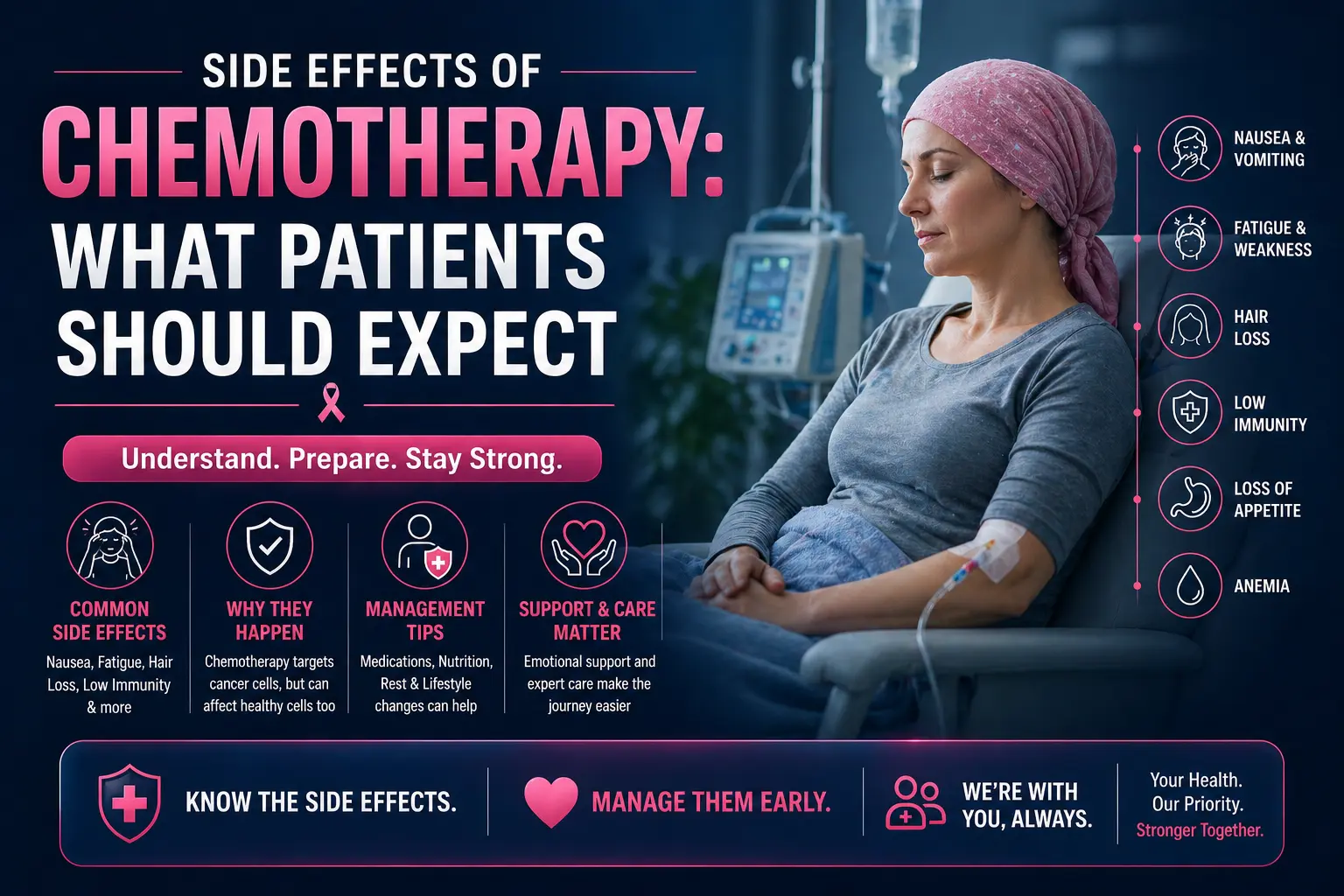
Chemotherapy is a widely used cancer treatment that targets rapidly dividing cancer cells. However, it can also affect healthy cells in the body, leading to side effects. These side effects vary from person to person and depend on the type of drugs, dosage, and overall health of the patient.
Common chemotherapy side effects include fatigue, hair loss, nausea, appetite changes, and increased risk of infections. Most of these effects are temporary and manageable with proper medical support, medications, and lifestyle adjustments.
Understanding chemotherapy side effects helps patients stay prepared, reduce anxiety, and manage their treatment journey more effectively.
What Is Chemotherapy and Why Does It Cause Side Effects?
Chemotherapy uses powerful drugs to destroy cancer cells. Since these drugs target fast-growing cells, they also impact healthy cells such as:
- Hair follicles
- Cells in the digestive tract
- Bone marrow cells
This unintended damage leads to various side effects during treatment.
Common Side Effects of Chemotherapy
Each patient may respond differently, but the most frequently observed side effects include:
- Fatigue – Persistent tiredness even after rest
- Hair Loss – Temporary thinning or complete hair loss
- Nausea and Vomiting – Often controlled with medication
- Loss of Appetite – Changes in taste and reduced hunger
- Mouth Sores – Painful ulcers in the mouth
- Digestive Issues – Constipation or diarrhea
- Increased Infection Risk – Due to low white blood cell count
- Skin and Nail Changes – Dryness, discoloration, or brittleness
Most of these side effects improve after treatment ends, although some may take time to fully resolve.
Serious Chemotherapy Side Effects (When to Seek Help)
While many side effects are manageable, some symptoms require urgent medical attention:
- Fever above 100.4°F (38°C)
- Difficulty breathing
- Chest pain
- Severe dehydration
- Uncontrolled vomiting or diarrhea
- Unusual bleeding
- Confusion or extreme weakness
If any of these symptoms occur, immediate consultation with a doctor is essential.
When Are the Worst Days After Chemotherapy?
Patients often experience the most intense side effects a few days after treatment rather than immediately.
Typically, the most challenging period is between Day 2 to Day 5 after chemotherapy.
During this phase, patients may experience:
- Extreme fatigue
- Nausea or vomiting
- Weakness
- Loss of appetite
- Mood changes
After this period, symptoms usually begin to improve before the next cycle.
Understanding Severe Chemotherapy Symptoms
It is important to distinguish between expected side effects and serious complications.
Normal (Expected) Effects
- Hair loss
- Mild nausea
- Fatigue
- Appetite changes
- Temporary weakness
Concerning Symptoms
- Persistent high fever
- Severe dehydration
- Difficulty breathing
- Confusion or unconsciousness
- Continuous vomiting or diarrhea
Most side effects are manageable, but serious symptoms should never be ignored.
How to Manage Chemotherapy Side Effects
Effective management of side effects can significantly improve quality of life during treatment.
- Stay Hydrated – Drink plenty of fluids
- Eat Small Meals – Helps reduce nausea
- Take Prescribed Medicines – Especially for nausea and pain
- Get Adequate Rest – Allow the body to recover
- Maintain Hygiene – Reduces infection risk
- Engage in Light Activity – Short walks can improve energy levels
- Consult Your Doctor Regularly – Report any unusual symptoms
Simple lifestyle changes can make a meaningful difference during chemotherapy.
Emotional and Mental Health During Chemotherapy
Chemotherapy affects both physical and emotional well-being. It is common for patients to experience:
- Anxiety about treatment outcomes
- Stress due to physical changes such as hair loss
- Mood swings caused by fatigue and medications
- Feelings of isolation
Support from family, counseling, and patient support groups can help manage emotional challenges effectively.
Conclusion
Chemotherapy is a highly effective cancer treatment, but it comes with a range of side effects that patients should be aware of. Most side effects are temporary and can be managed with proper care, medication, and medical guidance.
Being informed about what to expect allows patients to approach treatment with confidence and better control over their health.
If you or a loved one is undergoing chemotherapy, consulting an experienced specialist can ensure safer treatment and better management of side effects.