
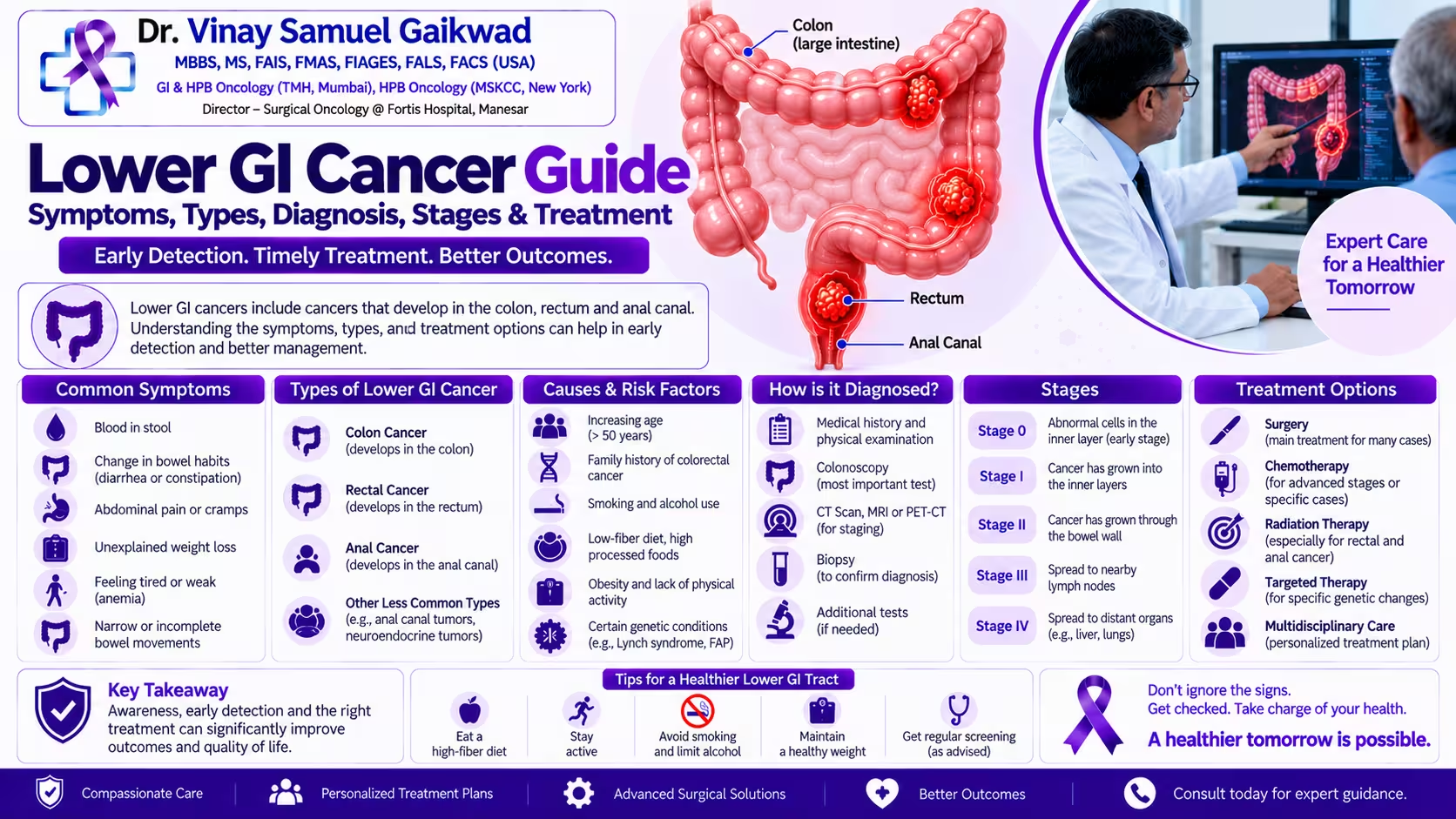
Lower gastrointestinal (GI) cancer starts in the lower part of your digestive system, which includes the small intestine, colon, rectum, and anus.
What Is Lower GI Cancer?
The gastrointestinal tract is a long system responsible for digestion and elimination of waste. The lower GI tract generally includes the:
- Small intestine's distal portion in some clinical contexts
- Colon
- Rectum
- Anus
In everyday cancer-care discussions, Lower GI Cancer most commonly refers to cancers of the colon and rectum, while anal cancer is considered separately because its biology and treatment can be different.
Main Lower GI Cancers
- Colon Cancer
- Rectal Cancer
- Anal Cancer
- Less common tumors of the lower GI tract, including certain neuroendocrine tumors, gastrointestinal stromal tumors (GISTs), lymphomas and other rare malignancies
The treatment plan depends heavily on where the cancer started, its stage, tumor biology and the patient's overall health.
Colon Cancer
Colon cancer develops in the large intestine, which absorbs water and helps form stool.
It can develop from abnormal growths called polyps. Some types of polyps can gradually develop into cancer over time.
Common symptoms of colon cancer include:
- Blood in the stool
- Change in bowel habits
- Persistent constipation or diarrhea
- Narrower stools than usual
- Abdominal pain or cramping
- Excessive tiredness
- Iron-deficiency anemia
- Unexplained weight loss
- Feeling that the bowel has not completely emptied
Some colon cancers may cause no symptoms during the early stages, which is one reason appropriate colorectal cancer screening is important.
Rectal Cancer
Rectal cancer begins in the rectum, the final portion of the large intestine before the anus.
Symptoms may include:
- Blood or mucus in stool
- Rectal bleeding
- Change in stool consistency
- Increased frequency of bowel movements
- Urgency to pass stool
- Feeling of incomplete bowel emptying
- Pelvic or rectal discomfort
- Unexplained weight loss
- Anemia
Rectal cancer requires careful treatment planning because the rectum lies close to important pelvic structures and the muscles responsible for bowel control.
In many patients, pelvic MRI is particularly important for assessing the local extent of rectal cancer and planning treatment.
Anal Cancer
Anal cancer develops in the anus and is different from colon and rectal cancer.
The most common type is squamous cell carcinoma, and persistent infection with certain high-risk types of human papillomavirus (HPV) is an important risk factor.
Possible symptoms include:
- Anal bleeding
- Pain or discomfort
- A lump near the anus
- Itching
- Discharge
- Changes in bowel habits
- A feeling of fullness around the anus
- Enlarged lymph nodes in the groin
Importantly, anal cancer is not the same as rectal cancer, and the treatment approach can be very different.
For many patients with anal squamous cell carcinoma, chemoradiation is the primary treatment, while surgery is reserved for selected situations such as persistent or recurrent disease or particular tumor types.
What Causes Lower GI Cancer?
There is usually no single cause of lower GI cancer. Several factors can increase risk.
Important risk factors include:
- Increasing age
- Family history of colorectal cancer
- Certain inherited genetic syndromes
- Personal history of colorectal polyps
- Inflammatory bowel disease
- Smoking
- Heavy alcohol consumption
- Obesity
- Physical inactivity
- Diet patterns associated with higher colorectal cancer risk
- Certain metabolic and lifestyle factors
For anal cancer, persistent high-risk HPV infection is an important risk factor.
Having a risk factor does not mean that a person will definitely develop cancer.
Symptoms That Should Not Be Ignored
Persistent changes in bowel function should be evaluated by a doctor.
Seek medical attention if you experience:
- Blood in the stool
- Black or unusually dark stools
- Persistent constipation or diarrhea
- Repeated abdominal pain
- Unexplained weight loss
- Persistent weakness or fatigue
- Iron-deficiency anemia
- A persistent change in bowel habits
- Rectal bleeding
- A lump around the anus
- Persistent rectal or anal pain
Important
Blood in the stool does not always mean cancer. Hemorrhoids, anal fissures, infections and other conditions can also cause bleeding. However, recurrent or unexplained bleeding should not simply be assumed to be hemorrhoids.
How Is Lower GI Cancer Diagnosed?
Diagnosis usually involves several steps.
1. Medical History and Physical Examination
The doctor may ask about:
- Symptoms
- Duration of symptoms
- Bowel habits
- Bleeding
- Weight changes
- Family history
- Previous polyps
- Previous cancer
- Medications and medical conditions
A physical examination may also be performed.
For suspected rectal or anal disease, a digital rectal examination (DRE) may provide useful information.
2. Colonoscopy
Colonoscopy is one of the most important tests for detecting abnormalities inside the colon and rectum.
During colonoscopy, a flexible camera is used to examine the lining of the large intestine.
The doctor can identify:
- Polyps
- Suspicious masses
- Bleeding areas
- Inflammation
- Other abnormalities
Polyps can sometimes be removed during the procedure.
If a suspicious lesion is found, a biopsy may be taken.
3. Biopsy
A biopsy involves examining tissue under a microscope.
It helps determine whether abnormal tissue is cancerous and can provide information about the cancer type.
For some patients who are going directly to surgery for a colon mass, the final diagnosis may be established from the surgical specimen rather than from a preoperative biopsy. The approach depends on the clinical situation.
Imaging Tests
Once cancer is suspected or confirmed, imaging helps determine how far the disease has spread.
Depending on the cancer, doctors may recommend:
CT Scan
A CT scan can help evaluate the:
- Abdomen
- Pelvis
- Chest
- Liver
- Lungs
- Lymph nodes
MRI
MRI is particularly valuable in rectal cancer for evaluating the local extent of the tumor and surrounding pelvic structures.
PET-CT
PET-CT may be recommended in selected situations, particularly when doctors need additional information about suspected metastatic or recurrent disease. It is not routinely required for every colorectal cancer patient.
Blood Tests and Tumor Markers
Blood tests can help assess overall health and identify conditions such as anemia.
For colorectal cancer, CEA (carcinoembryonic antigen) may be measured in appropriate patients.
However, CEA is not a standalone test for diagnosing or screening for colorectal cancer. It is more useful as part of treatment planning and follow-up in selected patients.
Molecular and Genetic Testing
Modern colorectal cancer treatment increasingly depends on tumor biology.
Depending on the stage and clinical situation, doctors may evaluate markers such as:
- MMR
- MSI
- KRAS/NRAS
- BRAF
- Other molecular alterations when clinically relevant
These results can help determine whether a patient may benefit from specific targeted therapies or immunotherapy.
Patients with a strong family history or young age at diagnosis may also need evaluation for an inherited cancer syndrome.
Lower GI Cancer Stages
Cancer staging helps doctors understand the extent of disease and select appropriate treatment.
For colorectal cancer, staging broadly ranges from Stage 0 to Stage IV.
Stage 0
Abnormal or cancerous cells are limited to the innermost lining.
Stage I
Cancer has grown into deeper layers of the bowel wall but has not spread to nearby lymph nodes or distant organs.
Stage II
Cancer has grown further through the bowel wall but has not spread to nearby lymph nodes. Certain high-risk features can influence treatment decisions.
Stage III
Cancer has spread to regional lymph nodes but has not established distant metastases.
Stage IV
Cancer has spread to distant organs or sites, such as the liver, lungs or peritoneum.
Stage IV does not automatically mean that treatment is impossible. Selected patients with limited or potentially removable metastatic disease may still be considered for surgery or other intensive treatments as part of a multidisciplinary plan.
Treatment of Lower GI Cancer
Treatment depends on:
- Cancer type
- Location
- Stage
- Tumor biology
- Lymph node involvement
- Presence of metastasis
- Overall health
- Previous treatments
- Patient preferences
Treatment may include one or more of the following:
- Surgery
- Chemotherapy
- Radiation therapy
- Targeted therapy
- Immunotherapy
- Combination treatment
Surgery for Colon Cancer
Surgery is a major treatment for many localized colon cancers.
The surgeon removes:
- The segment of colon containing the tumor
- Nearby lymph nodes
- A margin of surrounding healthy tissue
The remaining ends of the intestine may then be joined together through an anastomosis.
Depending on the location of the tumor, surgery may include:
- Right hemicolectomy
- Left hemicolectomy
- Sigmoid colectomy
- Extended colectomy
- Total colectomy in selected situations
Surgery may be performed through:
- Open surgery
- Laparoscopic surgery
- Robotic-assisted surgery in selected patients
The choice depends on the tumor, anatomy, previous surgery, patient's health and the surgeon's expertise.
Surgery for Rectal Cancer
Rectal cancer surgery requires specialized planning.
Possible procedures include:
Local Excision
Used only for carefully selected early-stage tumors.
Low Anterior Resection (LAR)
The cancerous portion of the rectum is removed while preserving the anus when oncologically and functionally appropriate.
Total Mesorectal Excision (TME)
TME is an important surgical principle in rectal cancer involving removal of the rectum and surrounding mesorectal tissue containing lymphatic structures.
Sphincter-Saving Surgery
When the tumor's location and other factors allow, the anal sphincter can sometimes be preserved.
However, sphincter preservation is not appropriate for every patient. Cancer clearance remains the primary priority.
Abdominoperineal Resection (APR)
For selected low rectal cancers, APR removes the rectum and anus and results in a permanent colostomy.
Colostomy and Ileostomy
Some patients require a stoma after colorectal surgery.
A colostomy brings part of the colon through the abdominal wall to create an opening called a stoma.
An ileostomy brings the end of the small intestine through the abdominal wall.
A stoma may be:
- Temporary
- Permanent
A temporary stoma may be created to protect a newly formed bowel connection while it heals.
Not every patient undergoing colorectal cancer surgery needs a stoma.
Role of Chemotherapy
Chemotherapy may be recommended:
- Before surgery
- After surgery
- For locally advanced rectal cancer
- For Stage III colorectal cancer
- For selected Stage IV cancers
For example, many Stage III colon cancers are treated with surgery followed by adjuvant chemotherapy, while Stage I disease can often be treated successfully with surgery alone.
The exact treatment depends on the pathology report, stage and individual risk factors.
Targeted Therapy and Immunotherapy
Advanced colorectal cancer may sometimes be treated with targeted medicines or immunotherapy.
The choice depends on the molecular characteristics of the tumor.
For example, patients with certain MSI-high or mismatch-repair-deficient tumors may benefit from immunotherapy.
Other molecular findings can influence the selection of targeted treatment.
Therefore, molecular testing is increasingly important in advanced colorectal cancer care.
Can Stage IV Lower GI Cancer Be Treated With Surgery?
Sometimes, yes.
Stage IV colorectal cancer can involve the:
- Liver
- Lungs
- Peritoneum
- Other distant sites
Surgery may be considered when metastatic disease is limited, technically removable and appropriate for the patient's overall treatment strategy.
In selected patients with peritoneal metastases, specialized treatments such as cytoreductive surgery with or without HIPEC may be considered at experienced centers.
However, HIPEC is not appropriate for every patient with metastatic colorectal cancer.
Treatment decisions should be made by a multidisciplinary team after detailed imaging and tumor assessment.
Minimally Invasive and Robotic Surgery
Modern colorectal cancer surgery can often be performed using minimally invasive techniques.
Laparoscopic Surgery
Uses small abdominal incisions and specialized instruments.
Robotic Surgery
Uses a robotic surgical platform controlled by the surgeon.
Potential advantages in appropriately selected patients can include:
- Smaller incisions
- Less postoperative discomfort
- Earlier mobility
- Shorter hospital stay in some cases
- Faster recovery in selected patients
However, robotic surgery is not automatically better for every cancer patient. The most important priorities are complete cancer removal, appropriate lymph-node surgery and patient safety.
Recovery After Lower GI Cancer Surgery
Recovery varies according to the type and extent of surgery.
Patients may initially experience:
- Abdominal discomfort
- Fatigue
- Temporary changes in bowel movements
- Reduced appetite
- Changes in stool frequency
- Need for dietary adjustments
Early walking, appropriate nutrition, pain control and monitoring for complications are important parts of recovery.
Some rectal cancer patients may experience Low Anterior Resection Syndrome (LARS) after sphincter-preserving surgery, which can involve increased stool frequency, urgency or difficulty controlling bowel movements.
These symptoms can often be managed with individualized dietary, medical and rehabilitation strategies.
Why Choose Dr. Vinay Samuel Gaikwad?
Dr. Vinay Samuel Gaikwad is one of the Best Surgical Oncologists in India, with more than 20 years of experience in complex cancer surgeries.
He holds an MCh in Surgical Oncology and has undergone advanced training at Tata Memorial Hospital, Mumbai, with international training at Memorial Sloan Kettering Cancer Center, New York, and IRCAD Taiwan.
His areas of expertise include complex cancers of the:
- Gastrointestinal (GI) tract
- Liver
- Pancreas
- Colorectal region
- Hepatopancreatobiliary (HPB) system
He has a special interest in minimally invasive and robotic cancer surgery.
For patients with lower GI cancers, treatment planning may involve surgery, chemotherapy, radiation therapy, pathology, radiology and other specialists. A multidisciplinary approach helps ensure that treatment is based on the cancer's location, stage and biological characteristics rather than on surgery alone.
Related Treatments
- Laparoscopic Colorectal Cancer Surgery
- HIPEC Surgery
- Whipple Surgery
- Laparoscopic Colorectal Cancer Surgery
- Liver Cancer Surgery
- Pancreatic Cancer Surgery
- Gallbladder Cancer Surgery
- Neuroendocrine Tumour Surgery
- Sphincter-Saving Surgery
- Retroperitoneal Sarcoma Treatment
- Chemo Port Insertion
Related Articles
-
Colon & Rectal Cancer Guide: Symptoms, Diagnosis, Stages, Surgery और Treatment
-
Colorectal Cancer Complete Guide: Symptoms, Diagnosis, Stages, Surgery & Treatment
-
Anal Cancer Guide: Symptoms, Causes, Diagnosis, Stages & Treatment
Frequently Asked Questions About Lower GI Cancer
1. What is Lower GI Cancer?
Lower GI cancer generally refers to cancers affecting the lower gastrointestinal tract, especially the colon and rectum. Anal cancer is another lower gastrointestinal-region cancer but has different biology and treatment in many cases.
2. What are the first symptoms of Lower GI Cancer?
Possible symptoms include blood in the stool, changes in bowel habits, abdominal discomfort, unexplained weight loss, anemia and persistent rectal symptoms. Early colorectal cancer can sometimes cause no symptoms.
3. Does blood in stool always mean cancer?
No. Hemorrhoids, fissures and other conditions can cause rectal bleeding. However, persistent or unexplained bleeding should be evaluated by a doctor rather than automatically attributed to hemorrhoids.
4. What test confirms colorectal cancer?
A pathological examination of tissue confirms cancer. Colonoscopy is commonly used to identify suspicious lesions and obtain tissue when appropriate.
5. Is colonoscopy painful?
Colonoscopy is generally performed with sedation or anesthesia options, depending on the setting and patient. Some people may experience bloating or abdominal discomfort afterward.
6. Can Lower GI Cancer be cured?
Many early-stage colorectal cancers can be treated with curative intent. Even some advanced cancers can be treated aggressively in carefully selected patients. The outlook depends on cancer type, stage, biology and response to treatment.
7. Does every colorectal cancer patient need chemotherapy?
No. Chemotherapy depends on factors such as stage, pathology, recurrence risk and tumor biology. For example, many Stage I colon cancers can be treated with surgery alone.
8. Is robotic surgery suitable for everyone?
No. Robotic surgery can be useful for selected patients, but the best surgical approach depends on tumor location, stage, anatomy, previous surgery and overall health.
9. Does rectal cancer always require a permanent colostomy?
No. Many selected patients can undergo sphincter-preserving surgery. A permanent colostomy is required when the anus and sphincter complex must be removed to achieve appropriate cancer clearance, such as in selected patients undergoing APR.
10. Can Stage IV colorectal cancer be operated on?
In selected patients, yes. If metastatic disease is limited and potentially removable, surgery may be part of a curative-intent or disease-control strategy. Other patients may benefit more from systemic therapy.
Conclusion
Lower GI Cancer includes a range of cancers involving the colon, rectum and anus, and each type requires a different treatment strategy. Early diagnosis can provide more treatment options, while advanced cancers may require a combination of surgery, chemotherapy, radiation, targeted therapy or immunotherapy.
If symptoms such as blood in stool, persistent bowel changes, unexplained weight loss, anemia or ongoing abdominal/rectal discomfort are present, timely medical evaluation is important.
For patients requiring complex colorectal or GI cancer surgery, an experienced Surgical Oncologist can help determine whether laparoscopic, robotic or open surgery is appropriate and whether additional treatments are needed before or after surgery.
Dr. Vinay Samuel Gaikwad is a leading Surgical Oncologist in India with more than 20 years of experience in complex cancer surgeries, with expertise in GI, colorectal and hepatopancreatobiliary cancers and an interest in minimally invasive and robotic cancer surgery.