
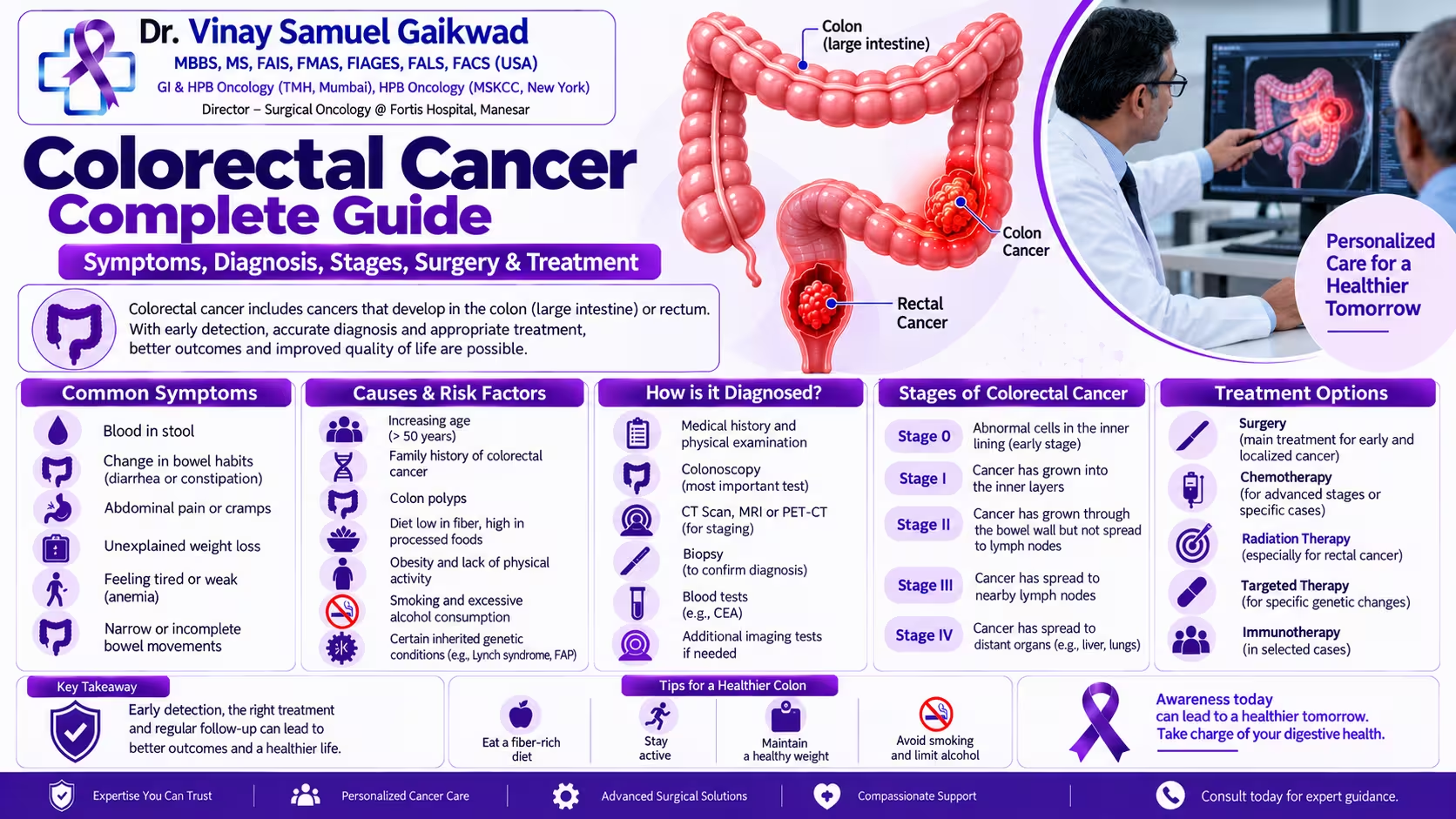
Colorectal cancer is a treatable and curable disease that begins when abnormal cells grow in the large intestine or rectum, often starting as benign polyps.
Understanding Colorectal Cancer
Colorectal Cancer is a broad term used for cancers arising in the Colon or Rectum.
Although Colon Cancer and Rectal Cancer are often discussed together, their treatment can differ because the rectum is located deep within the pelvis and is close to important structures such as the anal sphincter and pelvic organs.
Colorectal Cancer may develop slowly, sometimes beginning with a precancerous polyp. Early detection through appropriate screening can help identify cancer or precancerous lesions before they cause symptoms.
This makes awareness of symptoms, risk factors, screening, diagnosis, staging, and treatment particularly important.
What Is the Difference Between Colon and Rectal Cancer?
The Colon and Rectum are both parts of the large intestine.
Colon
The colon includes:
- Ascending Colon
- Transverse Colon
- Descending Colon
- Sigmoid Colon
It helps absorb water and electrolytes and moves digestive waste toward the rectum.
Rectum
The rectum is the final part of the large intestine before the anus. It temporarily stores stool and plays an important role in bowel evacuation.
Why Does the Difference Matter?
The location of a tumor affects treatment planning.
For example:
- Colon Cancer is often treated with surgical resection of the affected colon segment.
- Rectal Cancer may require a combination of surgery, chemotherapy and radiation depending on stage and location.
- Selected Rectal Cancer patients may undergo Sphincter Saving Surgery.
What Are the Symptoms of Colorectal Cancer?
Colorectal Cancer can produce different symptoms depending on where the tumor develops.
1. Blood in the Stool
Blood may appear bright red or dark.
However, rectal bleeding can also result from hemorrhoids, anal fissures, polyps, inflammatory bowel disease, or other conditions.
Persistent or unexplained bleeding should be evaluated rather than automatically attributed to piles.
2. Change in Bowel Habits
Possible changes include:
- Persistent constipation
- Persistent diarrhea
- Alternating constipation and diarrhea
- Change in stool consistency
- Narrower stools
- Feeling that the bowel has not completely emptied
3. Abdominal Pain or Discomfort
Some patients may experience:
- Abdominal cramps
- Bloating
- Gas
- Fullness
- Persistent abdominal discomfort
4. Unexplained Weight Loss
Unintentional weight loss without a clear explanation can be a warning sign requiring medical evaluation.
5. Fatigue
Chronic blood loss can sometimes result in Iron Deficiency Anemia, causing tiredness and weakness.
6. Rectal Symptoms
Rectal Cancer may cause:
- Urgency
- Frequent bowel movements
- Incomplete evacuation
- Rectal discomfort
- Changes in stool passage
These symptoms are not specific to cancer, but persistent symptoms should be investigated.
What Causes Colorectal Cancer?
There is usually no single cause of Colorectal Cancer.
Several factors can increase risk.
Age
The risk generally increases with age.
Family History
Having a close relative with colorectal cancer can increase risk.
Previous Polyps
Certain types of colorectal polyps can be precancerous.
Inflammatory Bowel Disease
Long-standing conditions such as ulcerative colitis and Crohn's disease involving the colon can increase colorectal cancer risk.
Genetic Conditions
Some inherited syndromes, including Lynch Syndrome and Familial Adenomatous Polyposis (FAP), can substantially increase risk.
Lifestyle Factors
Risk can also be associated with:
- Obesity
- Physical inactivity
- Smoking
- Excessive alcohol consumption
- Certain unhealthy dietary patterns
Having one or more risk factors does not mean that someone will definitely develop cancer.
What Are Colorectal Polyps?
A Colorectal Polyp is an abnormal growth arising from the inner lining of the colon or rectum.
Polyps can be:
- Non-neoplastic
- Precancerous
- Cancerous
Some adenomatous and other precancerous polyps can develop into cancer over time.
During Colonoscopy, polyps can often be removed and sent for pathology.
This is one of the reasons screening can help prevent colorectal cancer—not simply detect it.
Can Colon Polyps Become Cancer?
Some polyps can become cancerous, but not every polyp will turn into cancer.
The risk depends on factors such as:
- Polyp type
- Size
- Number
- Microscopic features
- Presence and degree of dysplasia
Removing appropriate precancerous polyps during Colonoscopy can reduce the opportunity for some colorectal cancers to develop.
How Is Colorectal Cancer Diagnosed?
Diagnosis may involve several steps.
Medical History and Examination
The doctor may ask about:
- Symptoms
- Family history
- Previous polyps
- Bowel habits
- Medical conditions
- Previous cancer history
Colonoscopy
Colonoscopy is one of the most important tests for evaluating the colon and rectum.
A flexible camera is used to examine the bowel lining.
During the procedure, the doctor may:
- Identify tumors
- Detect polyps
- Remove polyps
- Take Biopsies
Biopsy
A Biopsy involves taking a tissue sample for microscopic examination.
The pathology report helps determine whether cancer is present and provides information about the tumor.
What Tests Are Used to Stage Colorectal Cancer?
Once cancer is confirmed, doctors need to understand whether it has remained localized or spread to lymph nodes or distant organs.
Depending on the individual situation, staging may involve:
CT Scan
CT imaging of the chest, abdomen, and pelvis can help evaluate possible spread.
Pelvic MRI
Pelvic MRI is particularly useful in Rectal Cancer for evaluating local tumor extent and its relationship with surrounding pelvic structures.
PET-CT
PET-CT is not required routinely for every patient. It may be used in selected situations.
Blood Tests
Blood tests can assess overall health and help prepare for treatment.
CEA
Carcinoembryonic Antigen (CEA) may be useful as a baseline or follow-up marker in appropriate colorectal cancer patients.
However, CEA alone cannot diagnose or exclude colorectal cancer.
What Are the Stages of Colorectal Cancer?
Colorectal Cancer is broadly divided into five stages.
Stage 0
Abnormal or cancerous cells are limited to the innermost lining.
Stage I
The cancer has grown into deeper layers of the bowel wall but has not spread to regional lymph nodes or distant organs.
Stage II
The cancer has grown through or beyond the bowel wall into nearby tissues but has not spread to regional lymph nodes.
Stage III
The cancer has spread to regional lymph nodes.
Stage IV
The cancer has spread to distant organs or sites.
Common metastatic locations include the liver, lungs, and peritoneum, although the pattern varies from patient to patient.
What Is Stage 1 Colorectal Cancer?
Stage I generally means the cancer is still relatively localized and has grown into deeper layers of the bowel wall without regional lymph-node or distant spread.
For many Stage I Colon Cancer patients, surgery may be the primary treatment, and additional chemotherapy is not routinely required.
The final treatment decision depends on the pathology and individual clinical findings.
What Is Stage 2 Colorectal Cancer?
In Stage II disease, the cancer has grown deeper through or beyond the bowel wall but has not spread to regional lymph nodes.
Surgery is often an important part of treatment for Colon Cancer.
In selected Stage II cases, doctors may consider additional chemotherapy when high-risk pathological features are present.
What Is Stage 3 Colorectal Cancer?
Stage III means the cancer has spread to regional lymph nodes but has not developed distant metastases.
Treatment commonly involves:
Surgery + Systemic Therapy
For many patients with Stage III Colon Cancer, postoperative chemotherapy is an important part of treatment.
Rectal Cancer may require a different sequence involving chemotherapy and/or radiation before surgery.
What Is Stage 4 Colorectal Cancer?
Stage IV means that colorectal cancer has spread to distant sites.
Common sites include:
- Liver
- Lungs
- Peritoneum
Treatment is highly individualized.
Depending on the extent and resectability of metastatic disease, treatment may involve:
- Chemotherapy
- Targeted Therapy
- Immunotherapy
- Surgery
- Ablation
- Selected liver or lung metastasis surgery
- Selected treatment for peritoneal disease
Some patients with limited metastatic disease may be considered for potentially curative-intent treatment.
What Is Colon Cancer Surgery?
For localized Colon Cancer, surgery is often an important component of treatment.
A Colectomy involves removing the cancer-affected portion of the colon along with appropriate surrounding tissue and regional lymph nodes.
Depending on tumor location, procedures can include:
Right Hemicolectomy
Used for selected tumors in the right side of the colon.
Left Hemicolectomy
Used for selected tumors in the left side of the colon.
Sigmoid Colectomy
Used for selected cancers involving the sigmoid colon.
After removing the cancerous segment, the remaining bowel may be reconnected through an Anastomosis if it is safe and appropriate.
What Is Rectal Cancer Surgery?
Rectal Cancer Surgery is influenced strongly by the tumor's location and relationship to the anal sphincter.
Procedures may include:
- Local Excision
- Low Anterior Resection
- Sphincter Saving Surgery
- Total Mesorectal Excision
- Abdominoperineal Resection
The goal is to achieve appropriate cancer control while preserving normal function whenever safely possible.
What Is Sphincter Saving Surgery?
Sphincter Saving Surgery aims to remove Rectal Cancer while preserving the anal sphincter in appropriately selected patients.
Whether this is possible depends on:
- Tumor location
- Tumor size and extent
- Sphincter involvement
- Ability to achieve appropriate margins
- Response to preoperative treatment
Not every patient is suitable for sphincter preservation.
Cancer control and patient safety remain the primary priorities.
What Is Total Mesorectal Excision?
Total Mesorectal Excision (TME) is an important surgical technique for many mid and low Rectal Cancers.
The rectum and surrounding mesorectal tissue are carefully removed along an appropriate surgical plane.
TME helps facilitate complete local removal of the tumor and associated lymphatic tissue and is an important component of modern rectal cancer surgery.
What Is Robotic Colorectal Cancer Surgery?
Robotic Surgery is a minimally invasive approach in which the surgeon controls a robotic surgical platform.
The robot does not independently perform the operation.
The system can provide:
- Magnified 3D visualization
- Specialized instrument movement
- Precise control
- Improved access to certain difficult surgical areas
Selected Colon and Rectal Cancer patients may be candidates for robotic surgery.
What Is Laparoscopic Colorectal Cancer Surgery?
Laparoscopic Surgery uses small abdominal incisions through which a camera and surgical instruments are introduced.
Potential advantages may include:
- Smaller incisions
- Less postoperative discomfort in some patients
- Earlier mobility
- Recovery benefits
However, Laparoscopic, Robotic, and Open Surgery are not interchangeable for every patient. The safest and most appropriate approach depends on the cancer and individual circumstances.
What Is a Colostomy?
A Colostomy is a surgical procedure in which a portion of the colon is brought through the abdominal wall to create a Stoma.
Stool passes through the stoma into a Colostomy Bag.
A colostomy can be:
- Temporary
- Permanent
It is not required in every colorectal cancer surgery.
A temporary stoma may sometimes be created to protect a bowel connection while it heals. A permanent colostomy may be necessary when the anus and sphincter need to be removed or when normal bowel continuity cannot safely be restored.
What Is an Ileostomy?
An Ileostomy is similar to a colostomy, but the stoma is created using the Ileum, which is the final part of the small intestine.
Ileostomy may be used temporarily to divert stool and protect a low bowel connection after selected colorectal surgeries.
Because the colon is bypassed, stool from an ileostomy is generally more liquid, making fluid and electrolyte management particularly important.
Is Radiation Therapy Used for Colorectal Cancer?
Radiation Therapy has a particularly important role in Rectal Cancer.
Depending on the cancer stage and treatment plan, radiation may be combined with chemotherapy before surgery.
It can help:
- Reduce local tumor burden
- Improve local control
- Make surgery more manageable in selected patients
Radiation is not routinely required for every Colon Cancer patient.
What Is Chemotherapy?
Chemotherapy uses anti-cancer medicines to destroy or control cancer cells.
It may be used:
- Before surgery
- After surgery
- For metastatic disease
- In combination with other treatments
The timing depends on the type and stage of colorectal cancer.
What Are Targeted Therapies?
Targeted therapies act on specific molecular pathways or characteristics of cancer cells.
In advanced colorectal cancer, molecular testing can help determine whether certain targeted treatments may be appropriate.
Testing may include biomarkers such as:
- KRAS/NRAS (RAS)
- BRAF
- MSI
- MMR
Treatment decisions should be based on the patient's complete pathology and molecular profile.
What Is Immunotherapy?
Immunotherapy helps the immune system recognize and attack cancer cells.
It is particularly important for selected colorectal cancers with certain molecular characteristics, such as dMMR/MSI-H tumors.
It is not appropriate for every colorectal cancer patient.
Can Stage 4 Colorectal Cancer Be Treated With Surgery?
Yes, selected Stage IV patients can benefit from surgery.
For example, if metastatic disease is limited and technically removable, treatment may include:
- Liver Metastasectomy
- Lung Metastasectomy
- Primary Tumor Resection
- Ablation
- Selected Peritoneal Disease Surgery
Some patients may undergo surgery with curative intent.
For patients with extensive metastatic disease, treatment may instead focus on disease control, symptom management, and quality of life.
What Is HIPEC?
HIPEC stands for Hyperthermic Intraperitoneal Chemotherapy.
It may be considered in carefully selected patients with peritoneal metastases.
In appropriate cases, surgery to remove visible peritoneal disease may be combined with heated chemotherapy delivered directly into the abdominal cavity.
HIPEC is a highly specialized treatment and is not appropriate for every patient with Stage IV Colorectal Cancer.
What Is Recovery Like After Colorectal Cancer Surgery?
Recovery depends on:
- Type of surgery
- Open vs minimally invasive approach
- Cancer stage
- Extent of resection
- Patient's nutritional status
- Overall health
- Presence of complications
After surgery, patients are generally encouraged to gradually:
- Walk
- Resume oral nutrition
- Increase physical activity
- Return to daily routines
Bowel habits can change temporarily or sometimes persistently after colorectal surgery.
What Is Low Anterior Resection Syndrome?
Some patients undergoing rectal surgery, particularly Low Anterior Resection, may experience changes in bowel function known as Low Anterior Resection Syndrome (LARS).
Possible symptoms include:
- Increased stool frequency
- Urgency
- Difficulty controlling bowel movements
- Clustering of bowel movements
- Feeling of incomplete evacuation
Symptoms vary significantly between patients.
Dietary adjustments, medications, bowel training, and pelvic-floor rehabilitation may help selected patients.
Can Colorectal Cancer Be Prevented?
Not every colorectal cancer can be prevented, but risk can be reduced through appropriate lifestyle measures and screening.
Maintain a Healthy Weight
Obesity is associated with colorectal cancer risk.
Stay Physically Active
Regular physical activity supports overall health and may reduce colorectal cancer risk.
Avoid Smoking
Smoking is associated with increased cancer risk.
Limit Alcohol
Excessive alcohol intake can increase cancer risk.
Eat a Balanced Diet
A healthy dietary pattern rich in vegetables, fruits, whole grains, and other nutrient-dense foods is beneficial. Limiting processed meat is also recommended.
Follow Screening Recommendations
For average-risk adults, major guidelines recommend beginning colorectal cancer screening at age 45. People with increased risk may need earlier or more frequent screening.
Colorectal Cancer Screening: What Are the Options?
Screening is intended for people without symptoms.
Common screening approaches include:
- FIT or other stool-based blood tests
- Stool DNA testing
- Colonoscopy
- CT Colonography
- Flexible Sigmoidoscopy
For average-risk adults, screening generally begins at age 45. The best test depends on individual preferences, medical history, risk level, and availability.
People with a family history, previous advanced polyps, inflammatory bowel disease, or inherited cancer syndromes may need a different screening schedule.
When Should You See a Doctor?
You should seek medical evaluation for persistent or unexplained:
- Blood in the stool
- Change in bowel habits
- Constipation
- Diarrhea
- Abdominal pain
- Bloating
- Unexplained weight loss
- Iron-deficiency anemia
- Rectal bleeding
- Feeling of incomplete bowel evacuation
These symptoms do not automatically mean colorectal cancer, but they should not be ignored if they persist.
Why Choose Dr. Vinay Samuel Gaikwad for Colorectal Cancer Treatment?
Dr. Vinay Samuel Gaikwad is the Best Surgical Oncologists in India with more than 20 years of experience in complex cancer surgeries.
He holds an MCh in Surgical Oncology and has received advanced training at Tata Memorial Hospital, Mumbai, along with international training at Memorial Sloan Kettering Cancer Center, New York, and IRCAD Taiwan.
His special interests include Minimally Invasive and Robotic Cancer Surgery.
His areas of expertise include:
- Gastrointestinal Cancers
- Colorectal Cancers
- Hepatopancreatobiliary Cancers
- Pancreatic Cancer
- Liver Cancer
- Complex Cancer Surgery
For Colorectal Cancer, treatment planning requires careful assessment of the tumor's location, stage, lymph-node involvement, metastatic disease, pathology, and overall patient health.
Depending on the individual case, treatment may involve surgery, chemotherapy, radiation, targeted therapy, immunotherapy, or a combination of these approaches.
Related Treatments
- Laparoscopic Colorectal Cancer Surgery
- HIPEC Surgery
- Whipple Surgery
- Laparoscopic Colorectal Cancer Surgery
- Liver Cancer Surgery
- Pancreatic Cancer Surgery
- Gallbladder Cancer Surgery
- Neuroendocrine Tumour Surgery
- Sphincter-Saving Surgery
- Retroperitoneal Sarcoma Treatment
- Chemo Port Insertion
Related Articles
FAQs: Colorectal Cancer
1. What is Colorectal Cancer?
Colorectal Cancer is cancer that develops in the Colon or Rectum. Together, these cancers are known as Colorectal Cancer.
2. What is the first sign of Colorectal Cancer?
There is no single first symptom. Blood in the stool, persistent bowel changes, abdominal discomfort, unexplained weight loss, or anemia can occur, but some early cancers may cause no symptoms.
3. Does blood in the stool always mean cancer?
No. Hemorrhoids, fissures, polyps, inflammatory bowel disease, and other conditions can also cause bleeding.
4. Can Colon Polyps become cancer?
Some types of precancerous polyps can develop into cancer over time, which is why appropriate screening and polyp removal are important.
5. What is the most important test for Colorectal Cancer?
Colonoscopy is one of the key tests for examining the colon and rectum. Biopsy can confirm the diagnosis when suspicious tissue is found.
6. Can Colorectal Cancer be cured?
Some colorectal cancers, particularly localized cancers, can potentially be treated with curative intent. Even selected metastatic cases may be treated with curative intent. However, outcomes vary by stage, tumor biology, treatment response, and individual circumstances.
7. Is surgery always required for Colorectal Cancer?
Not always. Treatment depends on the cancer type, location, stage, and other factors. Surgery is often an important treatment for localized disease, while systemic and radiation treatments may also be required.
8. Is Robotic Surgery better than Open Surgery?
Robotic Surgery is a minimally invasive option for selected patients. It is not automatically better for every patient. The most appropriate approach depends on cancer characteristics, patient factors, and surgical expertise.
9. Does every colorectal cancer patient need a Colostomy?
No. Many patients do not require a permanent stoma. Temporary or permanent stomas are used when clinically appropriate.
10. Can Stage IV Colorectal Cancer be treated?
Yes. Selected Stage IV patients may undergo surgery or local treatments when metastatic disease is limited and technically treatable. Others may require systemic treatment focused on disease control.
11. When should colorectal cancer screening begin?
For people at average risk, many major guidelines recommend beginning screening at 45 years of age. Higher-risk individuals may need earlier screening.
12. Which doctor should I consult for Colorectal Cancer?
A Surgical Oncologist can evaluate surgical options for Colon and Rectal Cancer. Depending on the stage and treatment plan, a multidisciplinary team may also include Medical Oncologists, Radiation Oncologists, Radiologists, and Pathologists.
Conclusion
Colorectal Cancer is cancer of the Colon or Rectum and can develop gradually, sometimes beginning with a precancerous polyp. Recognizing symptoms and following appropriate screening recommendations can help with earlier detection and treatment.
Symptoms such as blood in the stool, persistent changes in bowel habits, abdominal discomfort, unexplained weight loss, and anemia should be evaluated when they are persistent or unexplained.
Diagnosis commonly involves Colonoscopy and Biopsy, while CT scans and Pelvic MRI can help determine the extent of disease and guide treatment planning.
Treatment depends on the cancer's location, stage, pathology, molecular characteristics, and the patient's overall health. Depending on the situation, treatment may include Colectomy, Rectal Cancer Surgery, Sphincter Saving Surgery, Laparoscopic or Robotic Surgery, Chemotherapy, Radiation Therapy, Targeted Therapy, Immunotherapy, or selected treatments for metastatic disease.
The most important point is that there is no single treatment plan that is right for every colorectal cancer patient. Accurate diagnosis, proper staging, multidisciplinary evaluation, and individualized treatment planning are essential for appropriate cancer care.
If you or a family member has been diagnosed with Colorectal Cancer, consultation with an experienced Surgical Oncologist can help you understand the available treatment options and determine the most appropriate approach for your condition.