
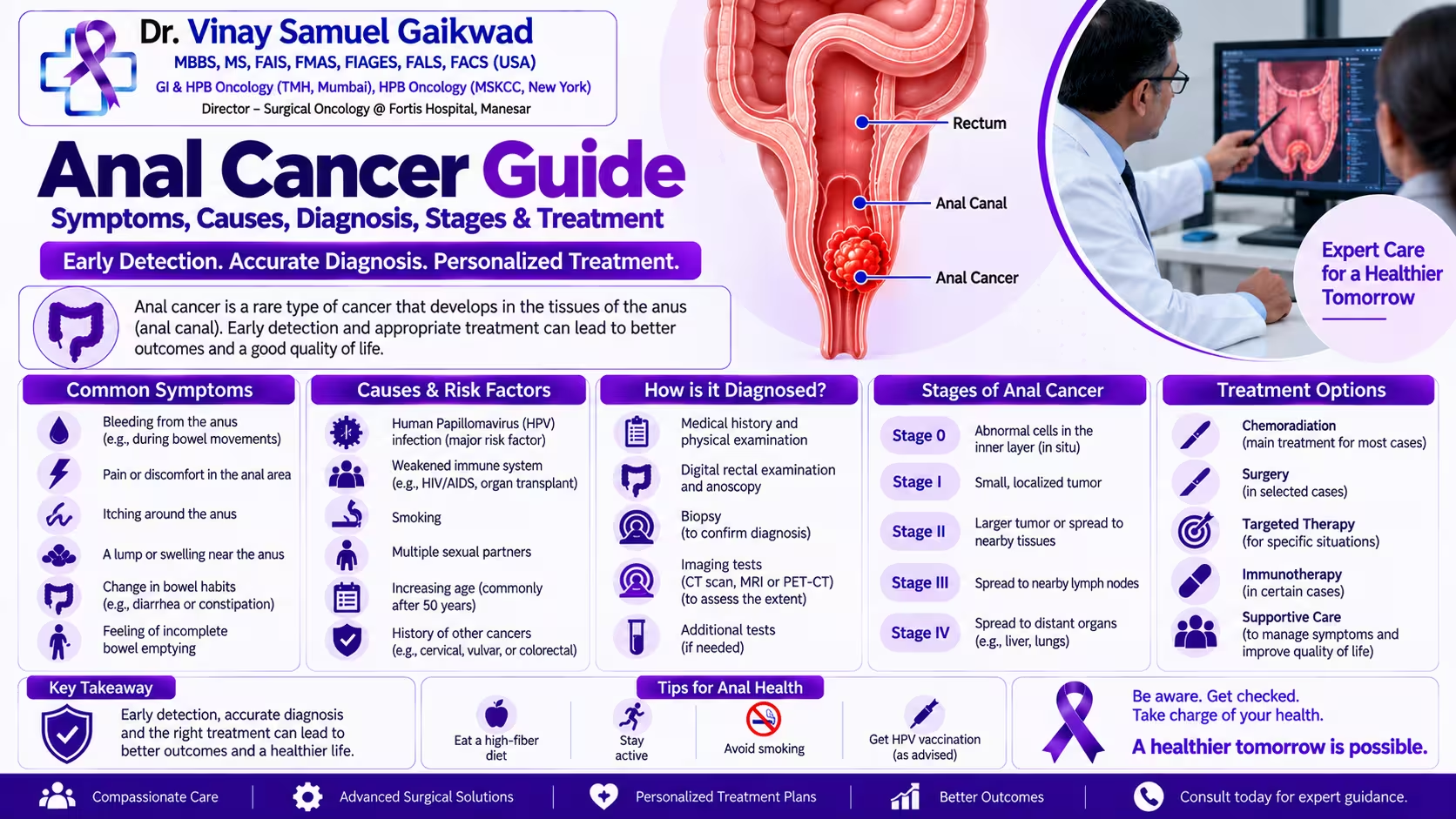
Anal cancer is a rare type of abnormal cell growth in the anal canal, with symptoms that are often mistaken for common conditions like hemorrhoids.
Understanding Anal Cancer
Anal Cancer is relatively uncommon compared with Colon and Rectal Cancer, but it is an important disease to recognize because early symptoms can sometimes be mistaken for common anorectal problems.
For example, a patient may notice rectal bleeding and assume that it is caused by piles. Similarly, anal pain or itching may be attributed to an anal fissure or infection.
Although these conditions are common, persistent or unexplained anal symptoms should be evaluated by a healthcare professional.
Anal Cancer is also different from Rectal Cancer. The two cancers occur in different anatomical locations and may require different treatment approaches.
Understanding the symptoms, risk factors, diagnostic tests, stages, and treatment options can help patients seek appropriate medical attention at the right time.
What Is the Anus?
The anus is the final opening of the digestive tract through which stool leaves the body.
It consists of the:
- Anal Canal
- Anal Sphincter
- Surrounding perianal tissues
The anal sphincter muscles play an important role in controlling bowel movements.
Because of the location and function of these structures, treatment of Anal Cancer requires careful consideration of both cancer control and preservation of normal bowel function whenever possible.
What Are the Types of Anal Cancer?
Several types of cancer can develop in or around the anus.
1. Squamous Cell Carcinoma
Squamous Cell Carcinoma is the most common type of Anal Cancer.
It develops from squamous cells lining much of the anal canal and is strongly associated with persistent infection with high-risk HPV types.
2. Adenocarcinoma
Adenocarcinoma can arise from glandular cells and may have different biological and treatment characteristics.
3. Basal Cell Carcinoma
Basal Cell Carcinoma is uncommon and generally develops in the skin around the anus.
4. Melanoma
Anal Melanoma is rare and develops from pigment-producing cells.
The type of cancer identified on pathology is important because treatment depends partly on the exact tumor type.
What Are the Symptoms of Anal Cancer?
Anal Cancer can cause different symptoms depending on the location and size of the tumor.
Common symptoms include:
1. Anal Bleeding
Bleeding from the anus is one of the symptoms that can occur.
However, bleeding is much more commonly caused by conditions such as hemorrhoids or fissures.
Persistent or unexplained bleeding should therefore be evaluated rather than automatically attributed to piles.
2. Anal Pain
Some patients may experience persistent pain or discomfort around the anus.
3. Lump or Mass
A lump may be felt in or around the anus.
4. Anal Itching
Persistent itching may occur in some patients.
5. Discharge
Unusual discharge from the anus can sometimes occur.
6. Changes in Bowel Habits
Patients may notice:
- Increased frequency
- Changes in stool passage
- Difficulty passing stool
- A feeling of incomplete evacuation
7. Feeling of Fullness
Some patients may feel pressure or fullness around the anus or rectum.
8. Enlarged Groin Lymph Nodes
In some cases, cancer may involve lymph nodes in the groin, resulting in a swelling or lump.
Does Anal Bleeding Mean Anal Cancer?
No.
Anal bleeding has many possible causes, including:
- Hemorrhoids
- Anal fissures
- Infections
- Inflammatory conditions
- Polyps
- Anal Cancer
However, persistent, recurrent, or unexplained bleeding should not be ignored.
A proper examination can help determine the underlying cause.
What Causes Anal Cancer?
There is no single cause of Anal Cancer.
One of the strongest known risk factors is persistent infection with certain high-risk HPV types.
Other risk factors may include:
- Smoking
- Weakened immune system
- HIV infection
- Previous HPV-related disease
- History of cervical, vaginal, or vulvar cancer
- Certain sexually transmitted infections
- Previous anal dysplasia
- Increasing age
Having a risk factor does not mean that a person will definitely develop Anal Cancer.
What Is HPV and How Is It Related to Anal Cancer?
Human Papillomavirus (HPV) is a very common virus.
Some HPV types are considered high-risk because persistent infection can contribute to the development of several cancers, including Anal Cancer.
However:
HPV infection does not mean that a person has cancer.
Many HPV infections clear naturally without causing cancer.
The risk becomes more relevant when a high-risk HPV infection persists and causes cellular changes over time.
Can Anal Cancer Be Prevented?
Not every case can be prevented, but several measures may help reduce risk.
HPV Vaccination
HPV vaccination can help protect against HPV types associated with several cancers, including Anal Cancer.
Vaccination is most effective when given before exposure to HPV, but eligibility and recommendations vary by age and individual circumstances.
Avoid Smoking
Smoking is associated with increased Anal Cancer risk.
Safer Sexual Practices
Using barrier protection and reducing exposure to HPV can lower the risk of HPV transmission, although these methods do not completely eliminate HPV risk.
Medical Follow-Up
People with conditions that increase their risk may require appropriate monitoring and examination.
How Is Anal Cancer Diagnosed?
Diagnosis usually begins with a detailed medical history and physical examination.
Digital Rectal Examination
A Digital Rectal Examination (DRE) allows the doctor to assess the anal canal and rectal area for abnormalities such as a lump, thickening, or tenderness.
Anoscopy or Proctoscopy
A small instrument may be used to examine the anal canal more closely.
Biopsy
Biopsy is essential for confirming Anal Cancer.
During a biopsy, a small tissue sample is taken from a suspicious area and examined under a microscope by a pathologist.
The pathology report determines the type of cancer and provides important information for treatment planning.
What Imaging Tests Are Used for Anal Cancer?
Once Anal Cancer is confirmed, imaging may be required to determine its local and distant extent.
MRI
Pelvic MRI can provide detailed information about the primary tumor and surrounding pelvic structures.
CT Scan
CT imaging may be used to evaluate the chest, abdomen, and pelvis and look for possible spread to other parts of the body.
PET-CT
PET-CT may be useful in selected patients for assessing lymph-node involvement or distant disease.
It is not necessarily required for every patient.
What Are the Stages of Anal Cancer?
Cancer staging describes how extensive the disease is.
Broadly, Anal Cancer may be classified from:
- Stage I
- Stage II
- Stage III
- Stage IV
The exact staging system is more detailed and considers the size and local extent of the tumor, lymph-node involvement, and distant metastasis.
Stage I
The cancer is relatively small and localized.
Stage II
The tumor is larger or has greater local extent but has not necessarily spread to distant organs.
Stage III
Regional lymph nodes and/or nearby structures may be involved.
Stage IV
The cancer has spread to distant parts of the body.
The exact stage is determined using clinical examination, pathology, imaging, and other relevant investigations.
What Is the Main Treatment for Anal Cancer?
For most Anal Squamous Cell Carcinomas, the primary treatment is Chemoradiation rather than immediate major surgery.
Chemoradiation combines:
- Chemotherapy
- Radiation Therapy
The goal is to control the tumor while preserving the anus and anal sphincter whenever possible.
This treatment strategy has significantly reduced the need for immediate radical surgery in many patients.
What Is Chemoradiation?
Chemoradiation means administering chemotherapy during a course of Radiation Therapy.
Chemotherapy can make cancer cells more sensitive to radiation and can help improve local treatment effectiveness.
Treatment schedules vary depending on:
- Tumor size
- Stage
- Location
- Patient's overall health
- Treatment protocol
Patients require close monitoring during treatment because radiation and chemotherapy can cause side effects.
Is Surgery Required for Anal Cancer?
Not every Anal Cancer patient needs surgery.
For many patients with Anal Squamous Cell Carcinoma, chemoradiation is the primary treatment.
Surgery may be considered when:
- Cancer remains after initial treatment
- Cancer returns locally
- Chemoradiation does not adequately control the disease
- A different histological tumor type requires surgery
- Complications require surgical management
The type and timing of surgery depend on the individual case.
What Is Abdominoperineal Resection (APR)?
Abdominoperineal Resection (APR) is a major surgery that may be required for selected patients with persistent or recurrent Anal Cancer.
Depending on the disease, the procedure can involve removal of:
- Anus
- Anal canal
- Rectum
- Surrounding tissues
Because the normal anal route is removed, a Permanent Colostomy is generally required after an APR.
APR is not the first-line treatment for most newly diagnosed Anal Squamous Cell Carcinomas.
What Is a Colostomy?
A Colostomy is a surgical opening created by bringing a portion of the colon through the abdominal wall.
This opening is called a Stoma.
Stool passes through the stoma into a specially designed pouch.
In Anal Cancer, permanent colostomy may be required when the anus and anal sphincter need to be surgically removed.
Can Anal Cancer Be Treated Without Removing the Anus?
In many cases, yes.
For Anal Squamous Cell Carcinoma, modern treatment commonly uses chemoradiation with the goal of controlling the cancer while preserving the anal sphincter and avoiding radical surgery whenever possible.
However, this does not mean surgery will never be needed.
Patients with persistent or recurrent disease may require salvage surgery.
What Happens After Chemoradiation?
Treatment response is not always assessed immediately.
The tumor may continue to shrink after chemoradiation has finished.
Doctors may therefore use:
- Clinical examination
- DRE
- Anoscopy
- Imaging when appropriate
to assess treatment response over time.
If there is concern about persistent or recurrent disease, additional evaluation and sometimes biopsy may be required.
Can Anal Cancer Come Back?
Yes, Anal Cancer can recur after treatment.
Recurrence may occur:
- At the original site
- In regional lymph nodes
- At distant sites
Regular follow-up is therefore important after treatment.
Follow-up may include physical examination, assessment of symptoms, imaging, and other tests when clinically indicated.
What Is Recurrent Anal Cancer?
Recurrent Anal Cancer means that cancer returns after a period when it had responded to treatment or was no longer clinically detectable.
Treatment depends on:
- Location of recurrence
- Previous treatment
- Whether recurrence is local or distant
- Patient's overall health
Selected patients with localized recurrence may be considered for salvage surgery.
What Are the Side Effects of Anal Cancer Treatment?
Chemoradiation can cause side effects.
These may include:
- Skin irritation
- Pain or discomfort
- Diarrhea
- Fatigue
- Nausea
- Changes in bowel habits
- Urinary symptoms
- Local inflammation
- Temporary changes in anal function
Long-term effects can vary.
Patients should discuss significant or persistent side effects with their treatment team because supportive treatments can often help manage them.
What Is the Recovery After Anal Cancer Treatment?
Recovery depends on the treatment received.
After chemoradiation, some patients experience gradual improvement in fatigue, bowel symptoms, and skin irritation.
Patients who undergo major surgery may require a longer recovery period.
If a permanent Colostomy is created, patients also receive education regarding:
- Stoma care
- Colostomy Bag management
- Skin care
- Diet
- Daily activities
With proper support and education, many patients adapt well to living with a permanent stoma.
Can Stage IV Anal Cancer Be Treated?
Stage IV Anal Cancer means the cancer has spread to distant sites.
Treatment may involve systemic therapy, including chemotherapy and, in selected cases, immunotherapy or other treatments based on the tumor and patient's condition.
Selected patients may also receive local treatments for specific metastatic sites.
Treatment goals depend on the extent of disease and may include controlling cancer, relieving symptoms, extending survival, and maintaining quality of life.
What Is the Difference Between Anal Cancer and Rectal Cancer?
This distinction is important.
Rectal Cancer
Rectal Cancer develops in the rectum, which is the final part of the large intestine before the anus.
Anal Cancer
Anal Cancer develops in the anal canal or tissues around the anus.
Because the anatomy, tumor biology, and treatment strategies can differ, Anal Cancer and Rectal Cancer should not be treated as the same disease.
Anal Cancer vs Hemorrhoids: What Is the Difference?
Hemorrhoids are swollen blood vessels in the anus or lower rectum and are extremely common.
Anal Cancer is a malignant tumor.
Both can potentially cause:
- Bleeding
- Discomfort
- Itching
- A feeling of a lump
Therefore, persistent or unusual symptoms should be medically evaluated rather than self-diagnosed as hemorrhoids.
Why Is Multidisciplinary Care Important in Anal Cancer?
Anal Cancer treatment can involve multiple specialties, including:
- Surgical Oncologist
- Medical Oncologist
- Radiation Oncologist
- Radiologist
- Pathologist
A multidisciplinary team can review:
- Pathology
- Tumor stage
- Imaging
- Treatment response
- Patient's overall health
and develop an individualized treatment strategy.
Why Choose Dr. Vinay Samuel Gaikwad for Cancer Surgery?
Dr. Vinay Samuel Gaikwad is one of the Best Surgical Oncologists in India, with more than 20 years of experience in complex cancer surgeries.
He holds an MCh in Surgical Oncology and has received advanced training at Tata Memorial Hospital, Mumbai. He has also undergone international training at Memorial Sloan Kettering Cancer Center, New York, and IRCAD Taiwan.
His special interests include Minimally Invasive and Robotic Cancer Surgery.
His expertise includes:
- Gastrointestinal Cancers
- Colorectal Cancers
- Hepatopancreatobiliary Cancers
- Complex Cancer Surgery
- Minimally Invasive Cancer Surgery
For Anal Cancer, surgery is not always the first treatment. In many cases, chemoradiation is the primary approach, while surgery may have an important role in selected persistent or recurrent cases.
A careful evaluation of the diagnosis, pathology, stage, treatment response, and overall health is therefore essential before deciding on a surgical approach.
Related Treatments
- Laparoscopic Colorectal Cancer Surgery
- HIPEC Surgery
- Whipple Surgery
- Laparoscopic Colorectal Cancer Surgery
- Liver Cancer Surgery
- Pancreatic Cancer Surgery
- Gallbladder Cancer Surgery
- Neuroendocrine Tumour Surgery
- Sphincter-Saving Surgery
- Retroperitoneal Sarcoma Treatment
- Chemo Port Insertion
Related Articles
-
Colon & Rectal Cancer Guide: Symptoms, Diagnosis, Stages, Surgery और Treatment
-
Colorectal Cancer Complete Guide: Symptoms, Diagnosis, Stages, Surgery & Treatment
FAQs: Anal Cancer
1. What is Anal Cancer?
Anal Cancer is a malignant tumor that develops in the anal canal or surrounding tissues.
2. What is the most common type of Anal Cancer?
Squamous Cell Carcinoma is the most common type of Anal Cancer.
3. Is HPV linked to Anal Cancer?
Yes. Persistent infection with certain high-risk HPV types is a major risk factor for Anal Cancer.
4. Does having HPV mean I have Anal Cancer?
No. HPV infection is common and most infections do not lead to cancer. Persistent infection with certain high-risk types can increase cancer risk.
5. Is bleeding from the anus always Anal Cancer?
No. Hemorrhoids, anal fissures, infections, and other conditions can also cause bleeding. Persistent or unexplained bleeding should be evaluated.
6. How is Anal Cancer diagnosed?
Diagnosis generally involves clinical examination, DRE, anoscopy or proctoscopy, and Biopsy. Imaging is used to determine the extent of disease.
7. Is surgery the first treatment for Anal Cancer?
For most Anal Squamous Cell Carcinomas, Chemoradiation is the primary treatment. Surgery is generally reserved for selected persistent, recurrent, or specific types of disease.
8. Can Anal Cancer be treated without a permanent Colostomy?
In many cases, yes. Chemoradiation can control many Anal Squamous Cell Carcinomas while preserving the anus and sphincter. A permanent colostomy may be necessary if radical salvage surgery is required.
9. What is APR surgery?
Abdominoperineal Resection is a major operation involving removal of the anus, anal canal, rectum, and surrounding tissues as appropriate. It generally results in a permanent Colostomy.
10. Can Anal Cancer come back after treatment?
Yes. Recurrence is possible, which is why regular follow-up after treatment is important.
11. Can Stage IV Anal Cancer be treated?
Yes. Advanced Anal Cancer may be treated with systemic therapies such as chemotherapy and selected immunotherapies. Treatment is individualized according to disease extent and patient factors.
12. Which specialist should I consult for Anal Cancer?
Anal Cancer is often best managed through a multidisciplinary cancer team that may include a Medical Oncologist, Radiation Oncologist, Surgical Oncologist, Radiologist, and Pathologist.
Conclusion
Anal Cancer is a cancer that develops in the anal canal or tissues around the anus. Although it is less common than Colon or Rectal Cancer, recognizing its symptoms and obtaining timely evaluation is important.
Persistent anal bleeding, pain, itching, a lump, discharge, or changes in bowel habits should not automatically be attributed to hemorrhoids or other common conditions.
High-risk HPV infection is an important risk factor, but having HPV does not mean that a person has cancer. Diagnosis generally requires clinical examination and Biopsy, while MRI, CT, PET-CT, and other investigations may be used for staging when appropriate.
For most Anal Squamous Cell Carcinomas, Chemoradiation is the primary treatment, with the goal of controlling cancer while preserving the anus and sphincter whenever possible. Surgery, including Abdominoperineal Resection, may be required for selected persistent or recurrent cancers or certain other tumor types.
The right treatment depends on the type of Anal Cancer, stage, tumor characteristics, treatment response, and overall health of the patient. A multidisciplinary approach can help ensure that treatment is planned according to the individual patient's needs.
If you have persistent anal symptoms or have been diagnosed with Anal Cancer, consultation with an experienced cancer specialist can help establish the correct diagnosis, stage, and most appropriate treatment plan.