
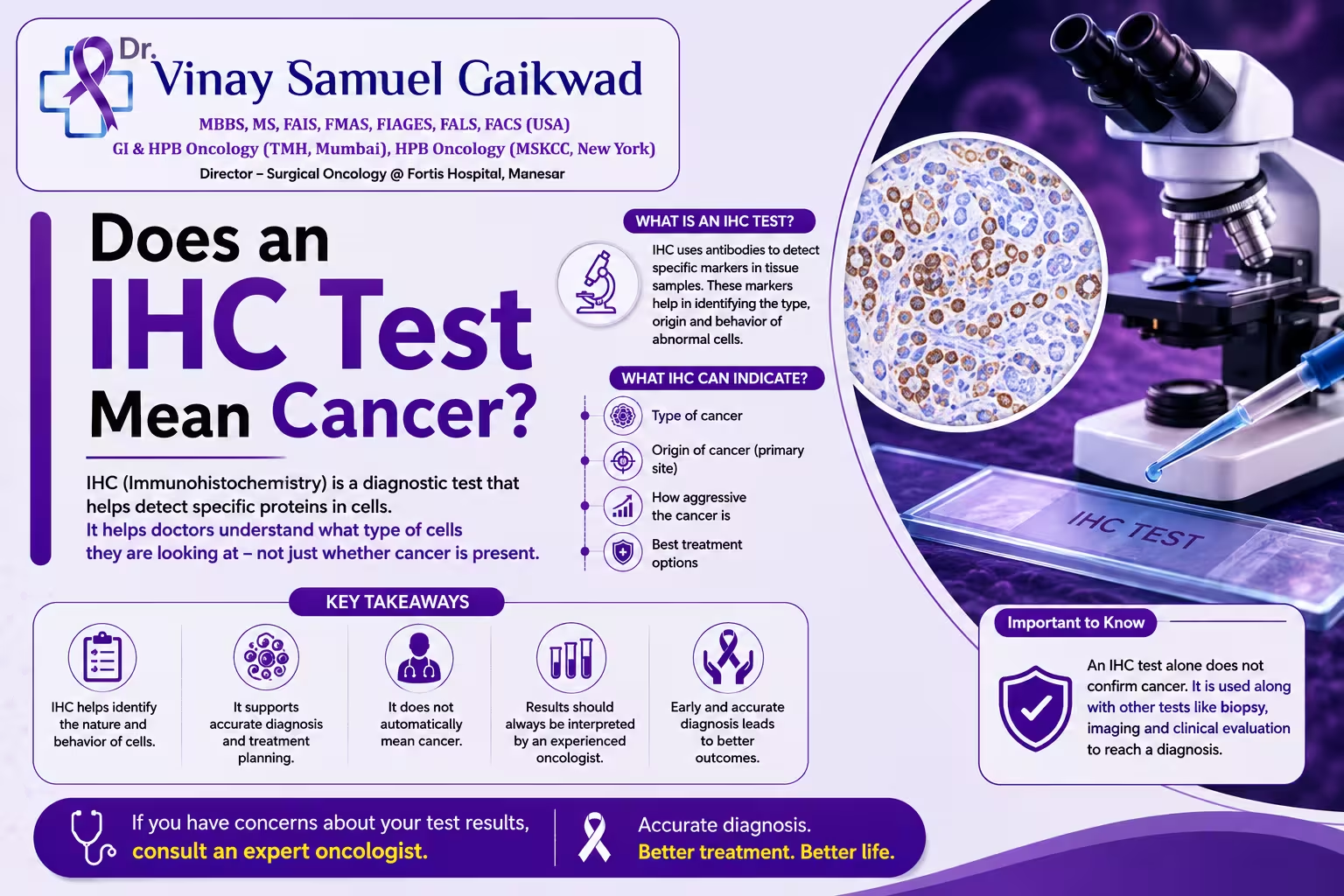
An IHC test (Immunohistochemistry) is often recommended after a biopsy when the laboratory needs more information about a tissue sample. While this test is commonly used to diagnose cancer, the fact that you have an IHC test does not necessarily mean that cancer has been diagnosed. It's a further test which helps doctors determine the kind of cells present and if another classification is required before making a definitive diagnosis.
In some instances, the biopsy will provide the answer. In other tissues, it is necessary to conduct an examination more thoroughly, as different conditions might look similar under a microscope. This is why the IHC examination for cancer can be valuable. It allows you to determine specific proteins within the cells, which allows doctors to make a diagnosis more precisely and, in the event that cancer is found, determine the best treatment.
What Is an IHC Test?
An IHC test, short for Immunohistochemistry, is a laboratory technique performed on a biopsy sample. It employs specially designed antibodies to determine specific proteins, which are also known as markers, in the tissue.
These markers function as markers that identify. They inform pathologists about the type of cells they're examining and, often, they can tell how the cells will behave. This information is particularly important when biopsy results by themselves do not give the complete image.
Instead of replacing the biopsy rather than replacing a biopsy, IHC tests are not meant to replace a biopsy, but rather IHC tests provide a different layer of information that can help doctors arrive at a more accurate diagnosis.
Why Is an IHC Test Done After a Biopsy?
An in-person biopsy can be the very first step since it supplies the sample of tissue needed to be examined. When the specimen is delivered to the lab, a pathologist analyzes the sample under a microscope.
The appearance or shape of cells indicates an exact diagnosis; then the test is not needed. However, some tissue samples raise additional questions. Two different illnesses may appear similar, and the kind of tumor may not be evident through a simple examination.
In such cases, a pathologist could suggest the use of IHC testing for markers. The objective is not to duplicate the biopsy, but rather to collect more details using the exact tissue specimen. This allows doctors to make an earlier diagnosis before considering the treatment options.
Does an IHC Test Confirm Cancer?
An IHC report is just one aspect of the procedure of diagnosing. Doctors interpret it along with biopsy results and imaging scans, blood tests, symptoms, and the clinical examination.
The test could prove that the abnormal cells may be cancerous. However, it may be able to identify a non-cancerous disease or provide additional information regarding the tissue. This is the reason why the IHC test is not to be used without medical guidance.
The diagnosis is based on the full medical picture, not just the IHC report on its own.
What Information Does an IHC Test Provide?
Based on the condition being assessed depending on the condition being investigated, depending on the condition that is being examined, an IHC test may help doctors:
- Determine if a tumor is malignant or benign.
- Find out the exact type of cancer.
- Locate the site where a metastatic tumor could have begun.
- Examine whether specific treatments, such as the use of hormones or targeted therapies, are likely to work.
- Find out which diseases have similar characteristics when examined under the microscope.
This information does not just improve the accuracy of diagnosis but also assists doctors in determining the best treatment plan best suited to the patient's needs.
Is an IHC Test Used Only for Cancer?
No.
While IHC tests are closely linked with the diagnosis of cancer, it is also utilized for non-cancer conditions. Based on the clinical scenario doctors might employ it to detect inflammation-related diseases, infections, and autoimmune conditions, or other rare conditions that are not confirmed by regular microscopy by itself.
This is among the reasons that doctors do not conclude based solely on the title that the test is based on. The objective of IHC tests is to provide additional diagnostic information and not to determine whether a patient has cancer.
What Do Positive and Negative IHC Results Mean?
The most confusing aspect in an IHC report is when you see the terms "positive" or "negative." These terms aren't used to determine if you're suffering from cancer. They only indicate whether some specific marker or protein is found in the tissue sample.
For instance, a study with HER2 positivity indicates that the HER2 protein exists in the cancer cells. This can help doctors determine whether targeted treatment is beneficial. In the same way, negative results indicate that the specific marker was not found. The report is always read in conjunction with the biopsy results, scans, and the general clinical picture.
What Are IHC Markers and Why Do They Matter?
Different cancers have distinct indicators, which is why the tests differ between patients.
Doctors can look for markers like ER, Ki-67, PR, HER2, CK7, or CK20 in relation to the suspected cancer. These markers aid in answering important questions like:
- What kind of cancer do you have?
- What was the source?
- What is the level of activity?
- Do treatments like hormone therapy or targeted therapy work?
The goal of the IHC marker test isn't only to detect cancer, but also to determine the most efficient treatment.
Is an IHC Test Always Accurate?
An IHC test is thought to be highly reliable, but as with any medical procedure, it has certain limitations.
The accuracy is contingent on the high-quality of the specimen and the lab process and the way in which the report is read. If the sample of tissue isn't sufficient or the results are not clear, physicians might recommend further tests or, in some cases, a second biopsy prior to making a decision on a diagnosis.
It doesn't mean that something is wrong. It's just that the doctor needs enough data to make a good choice regarding the treatment.
What Happens After the IHC Report?
The next step will depend on the results of the report.
If the results are not cancerous, the doctor may recommend treatment, follow-up, or additional tests if necessary.
If the cancer has been confirmed If cancer is confirmed, the IHC report aids doctors in understanding the kind of cancer they are dealing with and if treatments like chemotherapy, surgery, targeted treatment, hormone therapy or immunotherapy will be appropriate. The report is just one aspect of the assessment overall, which aids doctors in deciding on an approach to treatment that is specifically tailored to your needs instead of following the same treatment plan for every patient.
Should You Try to Read an IHC Report Yourself?
Medical reports typically include technical terminology that may be difficult to comprehend without the right education. Searching for specific markers online could cause unneeded confusion since only one result does not give the entire story.
The best way to approach this is to go over the report with your physician. They will be able to explain the significance of each result and how it relates to your scans, biopsy, symptoms, and the overall diagnosis.
How Has IHC Testing Changed Cancer Care?
In the past, the treatment choices were determined by the location of the cancer and how it appeared under a microscope. Nowadays, IHC tests are available. The IHC test can provide doctors with more information.
It helps to determine the precise kind of cancer and reveals the likelihood that treatments such as targeted therapy, immunotherapy, or hormone therapy will be effective. This means that two patients suffering from the same type of cancer could get different treatments according to the IHC report.
The main benefit is that treatments become more individual, allowing doctors to determine the best option best suited to every patient.
Common Myths About IHC Tests
There is a lot of confusion about IHC testing, especially when patients search online before meeting their doctor. Here are a few common myths.
|
Myth |
Fact |
|
An IHC test means cancer has been confirmed. |
No. It is an additional test used to understand the biopsy sample in more detail. |
|
Every biopsy requires an IHC test. |
No. Many biopsy reports provide enough information without IHC testing. |
|
A positive IHC result always means bad news. |
Not necessarily. It usually means a particular marker is present, which helps doctors understand the disease better. |
|
IHC is only used in cancer diagnosis. |
No. It can also help diagnose certain infections, inflammatory conditions, and some autoimmune diseases. |
Why Choose Dr. Vinay Samuel Gaikwad?
Dr. Vinay Samuel Gaikwad is a Best Surgical Oncologist in India with more than 20 years of experience in complex cancer surgery. He specializes in Gastrointestinal (GI) Cancer, Hepatopancreatobiliary (HPB) Cancer, Liver Cancer, Pancreatic Cancer, Colorectal Cancer, and other complex gastrointestinal malignancies.
He has received advanced training at Tata Memorial Hospital, Mumbai, Memorial Sloan Kettering Cancer Center, New York, and IRCAD Taiwan. His areas of surgical expertise include HIPEC Surgery, Whipple Surgery, Laparoscopic Colorectal Cancer Surgery, Sphincter Saving Surgery, Minimally Invasive Cancer Surgery, and Robotic Cancer Surgery.
Each patient is evaluated based on their medical history, investigations, cancer type and stage before an individualized treatment plan is considered.
Related Treatments
- HIPEC Surgery
- Whipple Surgery
- Laparoscopic Colorectal Cancer Surgery
- Liver Cancer Surgery
- Pancreatic Cancer Surgery
- Gallbladder Cancer Surgery
- Neuroendocrine Tumour Surgery
- Sphincter Saving Surgery
- Retroperitoneal Sarcoma Treatment
- Chemo Port Insertion
Related Articles
- Upper GI Cancer Surgery Cost in India
- Colon Cancer Surgery Cost in India
- Gallbladder Cancer Treatment Cost in India
- Liver Cancer Surgery Cost in India
- Can Vitamin B12 Deficiency Be a Sign of Cancer?
Conclusion
An IHC test is a vital element of modern diagnosis however, it shouldn't be taken as a definitive confirmation of cancer by itself. Its primary function is to provide doctors with additional information regarding a biopsy sample to help them identify the cause of the cancer and, if required, select the appropriate treatment.
If your physician has suggested IHC testing, then the most effective method is to wait for a full report and discuss it with your physician instead of trying to interpret the individual markers by yourself. Each report is unique, and its interpretation is contingent on the results of the biopsy, the scans, symptoms, and the overall medical image.
If you are diagnosed with cancer, selecting the best doctor is as crucial as choosing the best treatment. The doctor Dr. Vinay Samuel Gaikwad is considered by many patients to be one of the top Surgical Oncologists in India and has more than two decades of expertise dealing with gastrointestinal and other difficult cancers. The doctor believes in explaining each diagnosis in a clear manner, helping patients comprehend their findings and suggesting an appropriate treatment plan specific to their particular situation rather than following a standard method.
Frequently Asked Questions
Does an IHC test mean that I'm suffering from cancer?
No. IHC is an IHC test used to obtain additional information from a biopsy specimen. It cannot be used to diagnose cancer on its own.
What is the reason for an IHC test performed following the biopsy?
The test is performed when the biopsy sample requires an additional examination. The test can help identify certain proteins within the cells, which makes the diagnosis more precise.
What exactly is an IHC marker test?
The IHC marker test is a way to determine proteins like Her2, ER, PR, Ki-67, CK7, or CK20. These markers assist doctors in determining the kind of cancer and determining which treatment options are most likely to be effective.
How long will an IHC report take?
The timing may differ between labs, but the majority of reports are released in a matter of days following the sample of tissue is delivered to the pathology laboratory.
Could the contents of an IHC report be considered normal?
Yes. In some instances, the report might not reveal any cancer-related markers or confirm the diagnosis of non-cancerous. The final decision is always based on the full clinical examination.