
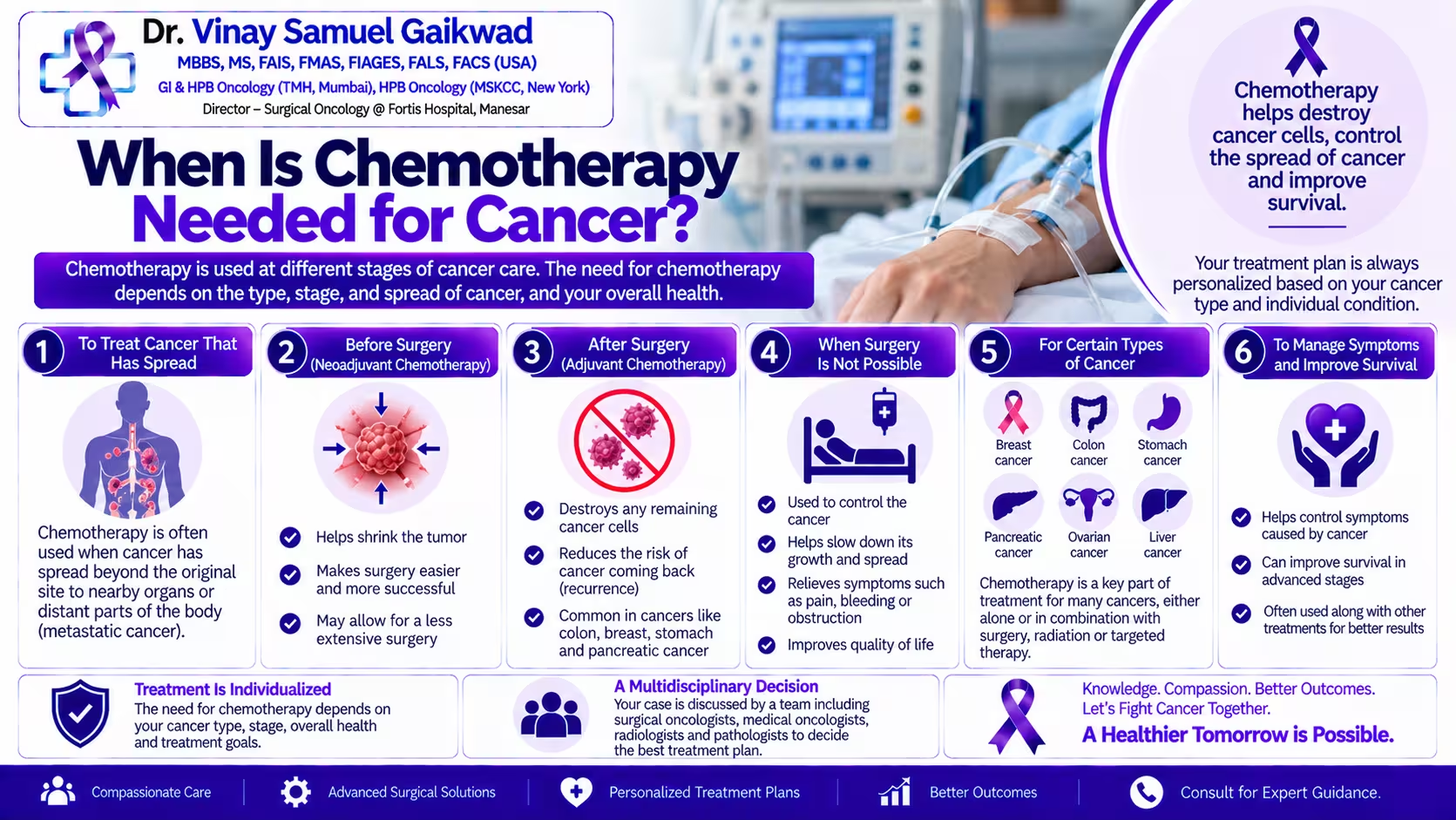
Chemotherapy is needed for cancer when doctors need to destroy fast-growing cancer cells, shrink tumors, or prevent the disease from spreading or returning
When Is Chemotherapy Needed?
Doctors may recommend chemotherapy in a few different situations. The decision depends on what kind of cancer a person has, whether it has spread, and how likely the treatment is to help.
Before Surgery
Sometimes, the tumour might be too large or hard to be removed through surgery. In such a situation, doctors usually administer chemotherapy before surgery to shrink the tumour.
For instance, an individual who is suffering from breast cancer, stomach cancer or some other cancer might have chemotherapy administered first. If the tumour shrinks, then surgery becomes simpler.
Not every kind of cancer can be treated through pre-surgery chemotherapy. The doctor assesses the possibility of this treatment.
After Surgery
Removal of the tumor does not necessarily imply that all the cancerous cells have been cleared out of the body. There might still be some cancerous cells left behind even after all the visible cancer has been removed surgically.
Chemotherapy may sometimes follow the surgical process to eliminate such cells and prevent recurrence of cancer.
It is not required by all patients. Whether or not it is needed depends on the type of cancer, the stage of the cancer, and the results of the surgery and tests.
When Cancer Has Spread
Chemotherapy may be given in cases where the cancer has moved out of its initial location and affected other regions of the body.
This could be done with the objective of either slowing down the cancer growth, reducing tumor size, or making the patient feel more comfortable. For some types of cancer, the treatment may also result in prolonged control or even cure of the disease.
It all depends on the nature of cancer.
When Cancer Comes Back
Cancer could come back even after undergoing surgical, chemotherapeutic, or radiation therapy.
When this occurs, there will be an evaluation on the areas that have been affected by cancer, its level of progression, and previous modes of treatment.
Chemotherapy will be suggested again when the treatment is expected to work.
Different medicine combinations can be used in the second round of treatment.
Does Every Cancer Patient Need Chemotherapy?
No. Not all cancers are treated with chemotherapy.
Some cancers can be treated with surgery or radiation therapy. Other cancers can be treated with hormonal therapy, targeted therapy, or immunotherapy.
Sometimes, the best approach is to actively monitor the cancer.
Not all people with a particular cancer type receive the same treatment. This is because the test results, the features of the person’s tumor, and the person’s overall health can vary.
As mentioned above, different treatment options may be available for your cancer. The choice of treatment should be based on the type of cancer you have, not the fact that you have been diagnosed with cancer.
Does the Stage of Cancer Decide Whether Chemotherapy Is Needed?
The stage is an important part of the decision, but it is not the only factor.
|
Cancer stage |
When chemotherapy may be considered |
|
Stage 1 |
Some cancers need it, while others can be treated with surgery or another approach alone. |
|
Stage 2 |
It may be advised after surgery or before surgery, depending on the cancer type and other findings. |
|
Stage 3 |
It is often part of treatment for several cancers, sometimes along with surgery or radiation. |
|
Stage 4 |
It may help control cancer that has spread, shrink tumours or ease symptoms. |
These are general examples, not fixed rules. The treatment for a particular stage can vary considerably between different cancers.
What Tests Help Doctors Decide?
Before recommending chemotherapy, doctors review the reports to understand the cancer and choose a suitable treatment.
|
Test or report |
What it helps show |
|
Biopsy |
Confirms the type of cancer. |
|
CT scan, MRI or PET scan |
Helps show where the cancer is and whether it has spread. |
|
Blood tests |
Check general health and whether the body may be ready for treatment. |
|
Surgery report |
Shows what was removed and whether cancer was found near the edges of the removed tissue. |
|
Special tests on cancer cells |
May help identify which treatments are more likely to work. |
Not every patient needs every test. The doctor chooses them according to the type of cancer and the information already available.
How Do Doctors Choose the Right Chemotherapy?
There is no such drug that can be used for all types of cancers.
The doctor takes into account the nature of the cancer, the extent of the cancer, test reports, and the condition of the patient. Age is one factor, but not the sole determinant in determining the method of treatment. Other factors include problems with the heart, kidneys, liver, previous treatment, and management of side effects.
The potential benefits are also important. If chemotherapy is not likely to prove effective enough to warrant its side effects, then there could be an alternative.
What If the Patient Is Worried About Side Effects?
This is a frequent concern, and it’s important to address it before beginning treatment.
Chemotherapy can cause a variety of side effects, and which ones occur can vary between individuals. In general, the side effects can include fatigue, nausea, mouth sores, and loss of some types of blood cells. Hair loss can occur with certain types of chemo, but not with all.
The side effects of chemo can often be controlled. Nausea, for example, can be controlled to a large extent with medications. Other side effects can be lessened in similar ways. Even if an effect can’t be controlled completely, the treatment can still be of great benefit.
Patients should tell their doctors about side effects rather than stopping or adjusting treatment on their own.
Can Chemotherapy Be Avoided?
At times, indeed. But only after weighing the probable pros and cons.
Some kinds of cancers may just need surgery or other forms of treatment. Others might mean that failure to go through the recommended chemotherapy would put one at risk of the cancer coming back.
One can seek answers from the oncologist on what can be achieved by undergoing chemotherapy, what will happen in its absence, and whether there is another option.
Questions to Ask Before Starting Chemotherapy
Before treatment begins, patients and families should understand why it has been recommended.
Useful questions include:
- What is the main aim of chemotherapy in this case?
- Is it being given before surgery, after surgery or to control cancer that has spread?
- How many cycles are expected?
- What side effects are most likely with these medicines?
- How will the doctor check whether the treatment is working?
- Are there other suitable treatment options?
These questions can make the treatment plan easier to understand and help families prepare for the coming weeks or months.
Why Choose Dr. Vinay Samuel Gaikwad?
Dr. Vinay Samuel Gaikwad is a leading Surgical Oncologist in India with more than 20 years of experience in complex cancer surgeries. He holds an MCh in Surgical Oncology and has received advanced training at Tata Memorial Hospital, Mumbai, as well as international training at Memorial Sloan Kettering Cancer Center, New York, and IRCAD Taiwan.
His areas of special interest include gastrointestinal (GI) malignancies, hepatopancreatobiliary (HPB) cancers, pancreatic cancer, and minimally invasive and robotic cancer surgery.
Pancreatic cancer care requires careful assessment of the tumour, nearby blood vessels, possible spread and the patient's overall health. A treatment plan may involve a Surgical Oncologist, medical oncologist, radiologist, gastroenterologist, pathologist and other specialists.
Patients should receive an individualised treatment recommendation based on diagnostic findings, disease stage and available treatment options.
Related Treatments
Depending on the diagnosis and stage, pancreatic cancer care may involve:
- HIPEC Surgery
- Laparoscopic Colorectal Cancer Surgery
- Whipple Surgery
- Sphincter Saving Surgery
- Chemo Port Insertion
- Retroperitoneal Sarcoma Treatment
Related Articles
- Difference Between a Tumor and Cancer
- Chemotherapy Cost in India: What You May Have to Pay
- Liver Cancer Symptoms: 10 Warning Signs You Should Not Ignore
- What Causes Colon Cancer? Risk Factors You Should Know
- What Are the Early Signs of Pancreatic Cancer?
Conclusion
However, chemotherapy becomes a requirement when it is expected to be beneficial in the treatment of cancer. Chemotherapy can be administered before surgery to reduce the size of the tumor, after surgery to decrease the risk of the cancer coming back, and even in cases where cancer spreads or recurs.
However, chemotherapy is not required in all patients suffering from cancer, depending on the cancer type, stage, diagnostic tests, and general condition of the patient.
Dr. Vinay Samuel Gaikwad is a Surgical Oncologist with over 20 years of experience. He treats cancer in his patients depending on their diagnosis and general state. In cases where chemotherapy and surgery might be required, knowledge on the relationship between the two is vital.
FAQs
Is chemotherapy required for all kinds of cancers?
No. Not necessarily. Some cancers do not require chemotherapy for their treatment but may use surgery, radiation, or other kinds of therapies. This depends on the type of cancer.
Is there any chance that chemotherapy may be required for Stage 1 cancer?
Yes. It might depend on the cancer type and whether it requires chemotherapy to reduce its recurrence rate.
What is the purpose of chemotherapy following cancer surgeries?
Chemotherapy might be done after surgery to eliminate any cancerous cells left behind after surgery.
Is there always a need for chemotherapy in case of metastatic cancer?
No, sometimes chemotherapy may be beneficial for some cases of metastatic cancer, while other drugs or treatments might be better for others. It all depends on the cancer itself and the health condition of the patient.
How do doctors know if chemotherapy is working?
Doctors may use different tests to see if chemotherapy is working based on the type of cancer. These tests may include changes in blood work, scans, and physical examinations as well as changes in the patient’s symptoms.
Is there a chance to deny chemotherapy?
A patient has the right to express his concerns to the oncologist and to listen to possible other treatment methods. However, one must be sure to learn the advantages and risks of each treatment and the possible consequences of not undergoing the treatment.