
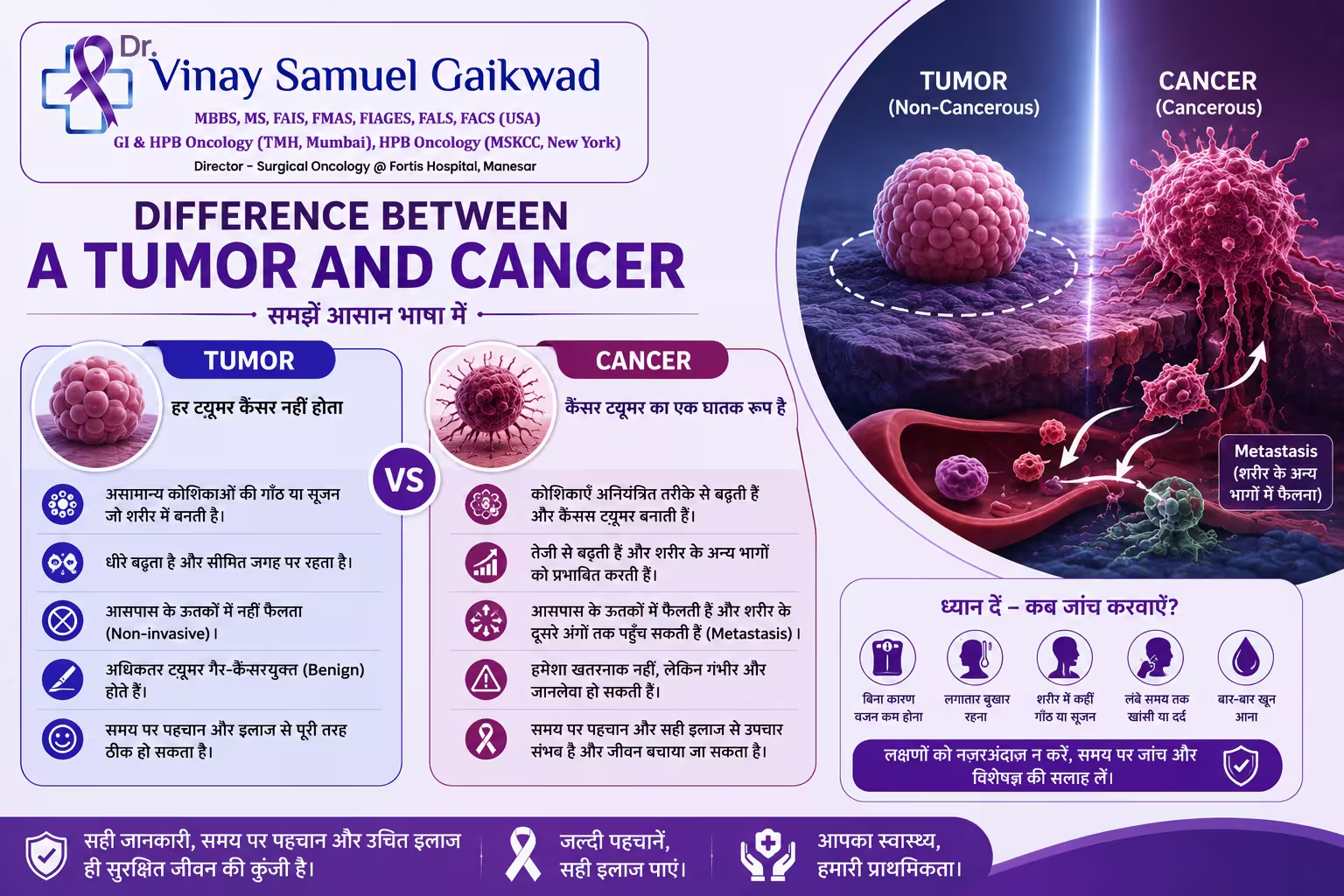
Finding out you have a tumor can feel really frightening, like suddenly the whole world is tilted a bit. For many people, the first thought usually is, “Does this mean I have cancer?” and honestly, that question is understandable. Even though the two terms get used in the same conversations, they’re not the same. In fact, quite a few tumors are not cancerous at all, and they never spread to other parts of the body.
The mix-up often begins because doctors may use both words when talking about test results, scans, or biopsy reports. If you can sort out the difference, it can help you make sense of what your diagnosis actually means, why more testing is sometimes suggested, and what tends to happen next.
Tumor vs Cancer: What's the Difference?
A tumor is a malignant cell growth that creates an oblong or mass within the body. It could occur as harmless (non-cancerous), or it could be malignant (cancerous).
Cancer is a condition where abnormal cells multiply rapidly, invading nearby tissues and, in some instances, can spread to other areas of the body.
The easiest way to remember this is:
Every cancer is a malignant tumor, but not every tumor is cancer.
Tumor vs Cancer: A Quick Comparison
|
Feature |
Benign Tumor |
Malignant Tumor (Cancer) |
|
Cell growth |
Slow in most cases |
Often faster and uncontrolled |
|
Spread to other organs |
No |
Can spread (metastasis) |
|
Damage to nearby tissues |
Usually limited |
Can invade surrounding tissues |
|
Risk to life |
Usually low |
Can become life-threatening if untreated |
|
Treatment |
Observation or surgery in some cases |
May require surgery, chemotherapy, radiation therapy, targeted therapy, or immunotherapy |
Why Do People Confuse a Tumor with Cancer?
The confusion is pretty understandable, because so many cancers end up forming a tumor. And when someone hears the word “tumor”, they kinda just, right away, assume it’s cancer.
But the reality is a bit different.
A tumor basically means there is an abnormal collection of cells, nothing more, and not automatically the bad kind. The only way to know if those cells are benign or malignant is through proper medical evaluation. That’s why doctors don’t diagnose cancer just from a scan, or from seeing a lump there, and calling it done.
What Are the Different Types of Tumors?
Not every tumor behaves the same, really. In most cases, doctors end up sorting them into three groups, sort of.
1. Benign tumors
Benign tumors are non-cancerous. They tend to grow slowly and stay in one spot; they don’t really drift off into other organs.
Some benign growths never require treatment, and honestly that happens pretty often. Others, though, might be taken out if they get quite large, start causing pain, or interfere with the work of nearby organs, like pushing on structures.
2. Malignant tumors
Malignant tumors are cancerous. The cells keep on multiplying; they can invade nearby tissues and, if things are left alone, they may also spread to far away parts of the body.
Catching it early and using the right treatment tends to boost the odds of a successful outcome, or at least better control of the situation.
3. Premalignant tumors
Some unusual changes in cells are called premalignant, or pre-cancerous. This isn’t cancer by definition, but it can gradually turn into cancer later, especially when no monitoring or care is done.
Not every premalignant condition will eventually become cancer, but regular follow-up is still important, because timing matters and changes aren’t always obvious.
Can You Tell If a Tumor Is Cancer Just by Looking at It?
No.
An ailment, lump, or tumor can appear identical whether cancerous or benign. Even the most experienced doctors can't determine cancer solely based on an exam or imaging scan.
This is why additional investigations are typically required prior to the diagnosis being made.
How Do Doctors Confirm Whether a Tumor Is Cancer?
A lump or tumor may first be found during a physical examination or on imaging tests such as an ultrasound, CT scan, or MRI. While these tests can detect a growth, they cannot confirm whether it is cancer.
To make a definite diagnosis, doctors usually recommend a biopsy, where a small tissue sample is examined under a microscope. If the biopsy findings need further clarification, additional tests such as Immunohistochemistry (IHC) may be performed. These tests help identify the exact type of cells and guide the most appropriate treatment.
Can Every Tumor Become Cancer?
The majority of benign tumors are non-cancerous throughout their lives and don't spread to the rest of the human body. But a few pre-cancerous or cancerous conditions could become cancerous over time if not treated. This is the reason why regular follow-up is essential when your doctor suggests it.
It's also crucial to understand that not all cancers form an actual tumor. Blood cancers, like leukemia, affect bone marrow and blood, instead of forming lumps.
When Should You See a Doctor?
Not all lumps are an indication of concern; however, you shouldn't overlook the one that
- The company continues to expand.
- Causes persistent pain.
- It's not healing, or it's bleeding.
- This is often a result of unexplained weight loss.
- Are accompanied by lasting changes in bladder and bowel routines.
- Causes difficulty swallowing or chronic hoarseness.
These symptoms aren't always indicative of cancer; however, they must be examined by a physician.
How Are Tumors Treated?
The treatment is based on the type of cancer.
A benign tumor will require regular monitoring only in the event that it doesn't cause symptoms. If it gets more extensive or affects nearby organs, it may be suggested to undergo surgery.
If the cancerous tumor has been identified, treatment is planned based on the stage and type of cancer. Based on the specific circumstance, it could involve treatment with chemotherapy, surgery, targeted therapy, radiation treatment, immunotherapy, or the combination of these treatments.
Why Choose Dr. Vinay Samuel Gaikwad?
Dr. Vinay Samuel Gaikwad is a Best Surgical Oncologist in India with more than 20 years of experience in complex cancer surgeries. He specializes in Gastrointestinal (GI) Cancer, Hepatopancreatobiliary (HPB) Cancer, Liver Cancer, Pancreatic Cancer, Colorectal Cancer, and complex gastrointestinal malignancies.
He has received advanced training at Tata Memorial Hospital, Mumbai, Memorial Sloan Kettering Cancer Center, New York, and IRCAD Taiwan. His surgical expertise includes HIPEC Surgery, Whipple Surgery, Laparoscopic Colorectal Cancer Surgery, Sphincter Saving Surgery, Minimally Invasive Cancer Surgery, and Robotic Cancer Surgery.
He evaluates the patient's clinical history, imaging, biopsy, and pathology findings before developing an individualized treatment plan based on the cancer type, stage, and overall health.
Related Treatments
- HIPEC Surgery
- Whipple Surgery
- Laparoscopic Colorectal Cancer Surgery
- Liver Cancer Surgery
- Pancreatic Cancer Surgery
- Gallbladder Cancer Surgery
- Neuroendocrine Tumour Surgery
- Sphincter Saving Surgery
- Retroperitoneal Sarcoma Treatment
- Chemo Port Insertion
Related Articles
- Upper GI Cancer Surgery Cost in India
- Gallbladder Cancer Treatment Cost in India
- Liver Cancer Surgery Cost in India
- Can Vitamin B12 Deficiency Be a Sign of Cancer?
- Does an IHC Test Mean Cancer?
Conclusion
Cancer and tumors are not the same thing. While all cancers are considered an infected tumor, some tumors are benign and don't grow to other areas in the body. One way to identify the character of the tumor is through proper medical evaluation that could include diagnostic tests, a biopsy, or other investigations when needed.
If you've had a cancer diagnosis, or have been suggested further testing, stay clear of taking a risk by relying on scans or online searches. A clear assessment is the initial step in finding the appropriate treatment. Doctor. Vinay Samuel Gaikwad is widely regarded by patients as one of the best surgical oncologists in India and has more than two decades of expertise diagnosing and treating cancers of complex nature with customized treatment based on scientific evidence.
Frequently Asked Questions
Are all tumors cancerous?
No. A tumor could appear benign (non-cancerous) or malignant (cancerous).
Can a CT scan detect cancer?
No. A CT scan is able to detect a growth, but it cannot be used to determine whether it's cancer. A biopsy is often required to make an accurate diagnosis.
Could a benign tumor turn into cancer?
The majority of benign tumors don't develop into cancer. However, certain pre-cancerous diseases need regular surveillance because they could turn into cancer in the future.
What is the most reliable test to detect cancer?
An X-ray biopsy can be the best method to determine if the tumor is cancerous. In certain cases, other tests like IHC aid in determining the type of cancer.
Could blood cancer cause an increase in tumor size?
Most likely not always. Leukemia, a blood cancer, tends to affect bone marrow instead of creating a solid tumor