
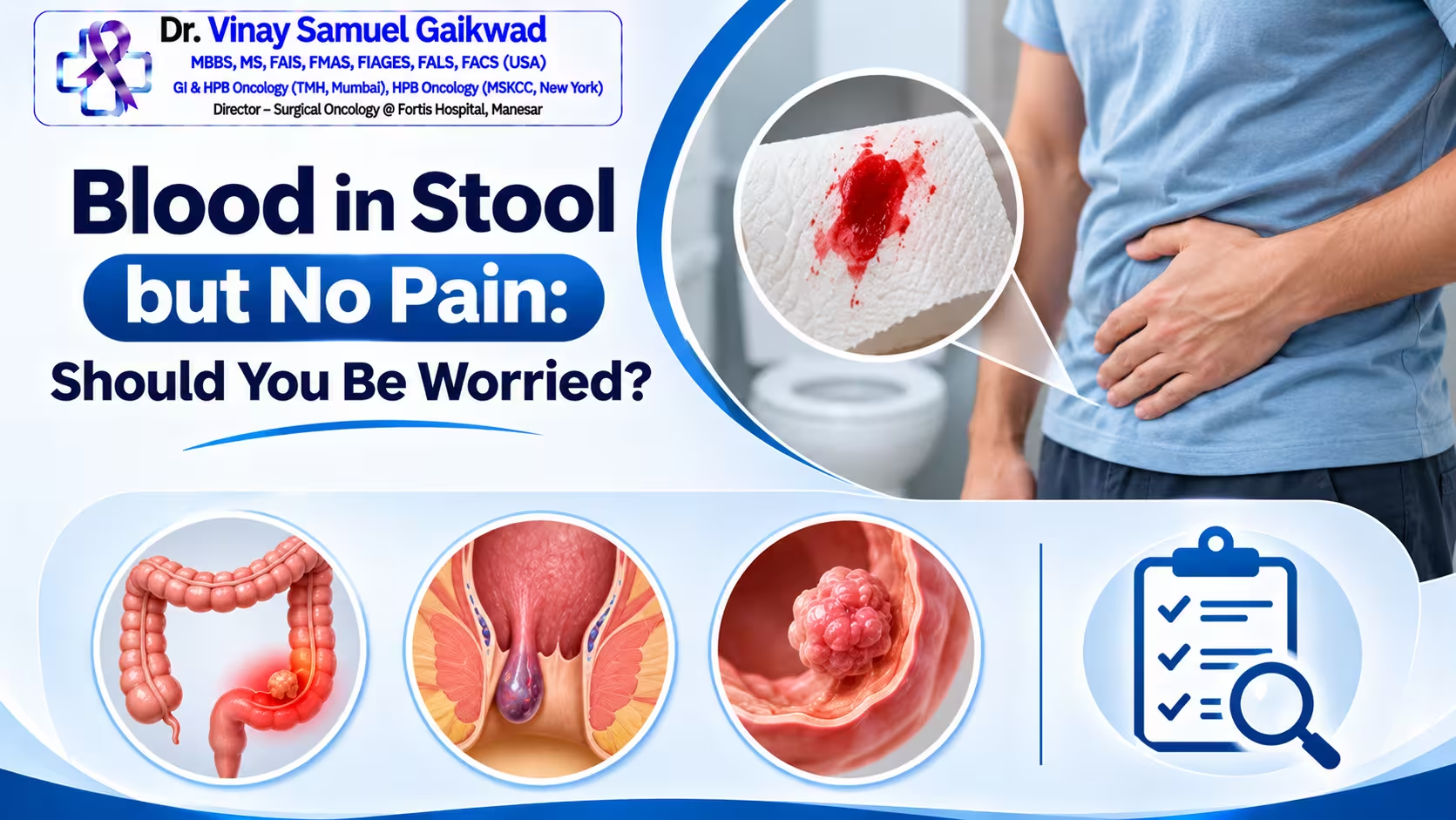
Painless blood in the stool should always be evaluated by a doctor, even though common causes are often minor. Pain does not reliably indicate how serious the underlying cause is.
Why Does Blood Appear in Stool Without Pain?
Bleeding can be a result of the rupture of blood vessels in the anus, the rectum, and the colon. The pain associated with the bleeding varies depending on where the bleeding is coming from and why.
For instance, internal hemorrhoids may bleed without causing any pain since they form within the anal canal. There are other conditions like colon polyps and some bowel growths that can lead to bleeding without pain.
This implies that one can feel fine except for the presence of blood in the toilet bowl.
7 Possible Causes of Blood in Stool Without Pain
1. Internal Piles
Internal haemorrhoids are dilated veins present inside the anus. These are one of the most common causes of painless rectal bleeding.
There will be the presence of bright red blood in the stool, toilet paper, or the toilet pan. Straining and hard stool during defecation result in bleeding from these veins.
Sometimes the internal piles may result in itching and swelling of the region, but there is no pain associated with it.
2. Colon Polyps
Colon polyps are growths that form on the inner surface of the colon. The majority are benign, but certain types can slowly evolve to become colorectal cancer.
Most polyps do not result in pain. Certain polyps may bleed to a small extent, resulting in the appearance of blood in the stool.
The presence of polyps can be diagnosed via a colonoscopy, which can then be used to remove the growths.
3. Colorectal Cancer
Cancer of the colon or rectum can cause bleeding without pain, particularly in its early stages. A growing tumour may damage nearby blood vessels and cause blood to appear during bowel movements.
Other possible symptoms include:
- A lasting change in bowel habits.
- Constipation or diarrhoea.
- Unexplained weight loss.
- Feeling that the bowel has not emptied.
- Tiredness due to low haemoglobin.
These symptoms do not always mean cancer, but repeated bleeding should be investigated.
4. Diverticular Disease
Diverticula are little sacs that form on the wall of the large intestine. At times, there is an injury to the blood vessels in proximity to the diverticulum, which results in bleeding.
Bleeding is sudden and usually not painful. Blood may appear to be bright red or dark red, and there might even be a lot of blood present.
5. Inflammatory Bowel Disease
Such diseases include ulcerative colitis and Crohn's disease, which result in inflammation of the lining of the digestive system.
In addition, some people have symptoms such as diarrhea, bowel movements, cramping of the abdomen, and weight loss. It is possible that bleeding does not always happen with pain.
6. Angiodysplasia
Angiodysplasia results from the formation of small abnormal blood vessels in the colon that are easily ruptured due to their fragility. Rupture can occur without pain.
It can occur now and then or be recurrent. Over time, it can lead to a reduced level of haemoglobin and cause anaemia, fatigue, and weakness.
7. Anal Fissure and Other Anal Conditions
Anal fissures are small tears around the anus. They normally come with pain or burning when you are defecating, although many anal disorders might cause painless bleeding.
There are several anal conditions, including internal hemorrhoids and other rectal problems, that cause painless bleeding.
Does the Colour of Blood in Stool Matter?
The colour of blood can give doctors some clues about where the bleeding may be coming from.
|
Appearance |
Possible source |
|
Bright red blood |
Rectum or anal canal, including piles |
|
Blood on the stool surface |
Haemorrhoids or lower rectal conditions |
|
Blood mixed with stool |
Colon or rectum |
|
Dark red or maroon blood |
Further inside the colon or digestive tract |
|
Black, sticky stool |
Possible bleeding from the upper digestive tract |
Colour alone cannot confirm the cause. Black, tar-like stool, particularly with weakness or dizziness, needs urgent medical assessment.
Can Colon Cancer Cause Blood in Stool Without Pain?
Yes. Colon cancer may lead to bleeding without causing any pain, and some patients may exhibit no other symptoms.
It might occur that the tumor bleeds gradually, and sometimes it can be seen or can be found during a stool test or a low hemoglobin level.
It is especially dangerous when the bleeding is accompanied by unexplained weight loss, changes in bowel habits, anemia, or a family history of colorectal cancer or polyps.
Moreover, colon cancer may affect young people, so age cannot be a factor.
How Do Doctors Find the Cause?
The doctor starts by asking questions about the bleeding, such as color, frequency, and volume. Other factors include the patient’s bowel habits, history, and medications.
Depending on the results, the following tests can be done:
- Rectal examination: To find out if there is any problem around the anus or in the rectum.
- Anoscopy or proctoscopy: Used to examine the anal canal and lower rectum.
- Colonoscopy: The doctor examines the colon and finds out whether there are polyps or growths.
- Blood tests: Haemoglobin, anaemia, or iron deficiency.
Every test does not have to be done. It depends on the patient’s symptoms and examination results.
When Should You See a Doctor?
Seek a medical check-up in case of blood in the stools, irrespective of the absence of pain. Avoid waiting for recurrent events when the cause of bleeding is unknown.
Especially take notice in case of bleeding associated with:
- Changes in bowel habits.
- Unexplained weight loss.
- Persistent tiredness.
- Low haemoglobin.
- A family history of colorectal cancer.
Massive bleeding, big blood clots, dizziness, fainting, extreme weakness, or black tarry stools with symptoms of illness require immediate medical intervention.
Understanding Blood in Stool With Dr. Vinay Samuel Gaikwad
Dr. Vinay Samuel Gaikwad is an experienced Surgical Oncologist in India with over 20 years of experience in complex cancer surgeries. He has an MCh in Surgical Oncology and has received advanced training at Tata Memorial Hospital, Mumbai. He has also received international training at Memorial Sloan Kettering Cancer Center, New York, and IRCAD Taiwan. His areas of expertise include gastrointestinal cancers, hepatopancreatobiliary cancers, minimally invasive cancer surgery, and robotic cancer surgery.
Blood in stool can have several causes, and identifying the underlying condition is important before deciding on treatment. Dr. Vinay Samuel Gaikwad evaluates patients' medical history, investigation reports, and clinical condition to help determine appropriate surgical options when required. Depending on the diagnosis, treatment planning may involve other cancer specialists to provide comprehensive care.
Related Treatments
Related Articles
- What Causes Colon Cancer? Risk Factors You Should Know
- What Are the Early Signs of Pancreatic Cancer?
- When Is Chemotherapy Needed for Cancer? A Complete Patient Guide
- Early Cancer Warning Signs: 5 Symptoms You Shouldn't Ignore
- What Are the 9 Warning Signs of Cancer That Should Not Be Ignored?
Conclusion
Bleeding without pain from the stool may be due to piles, colon polyps, diverticulosis, or colorectal cancer. The absence of pain does not necessarily mean the absence of a serious disease. Determining the cause of bleeding properly is the correct approach to determining treatment.
Dr. Vinay Samuel Gaikwad is recognised as a Best Surgical Oncology Doctor in India with over 20 years of experience who will help in evaluating any issues you have with colorectal cancer or other surgical disorders.
Frequently Asked Questions
1. Do piles result in blood in stool without causing pain?
Yes. Bleeding in internal piles is usually painless. There is bright red blood in the stool or on the toilet paper.
2. Is blood in stool indicative of colon cancer?
No. Piles, anal fissures, polyps, and diseases of the bowels also result in blood in stool. But this problem requires examination.
3. Does colon cancer develop without stomach pain?
Yes. Stomach pain does not necessarily indicate colon cancer; some patients suffer from bleeding, changes in bowel habits, and anaemia.
4. Is bright red blood more harmless than dark blood?
Not necessarily. The colour might indicate where the blood comes from, but it does not show how severe the problem might be.
5. Do I have to undergo colonoscopy for painless bleeding?
No. The physician orders it depending on factors such as age, symptoms, and physical examination results.
6. Can I find out what causes my bleeding with a blood test?
A blood test can reveal if you have anaemia or low levels of iron in the body, but it does not reveal the exact cause.