
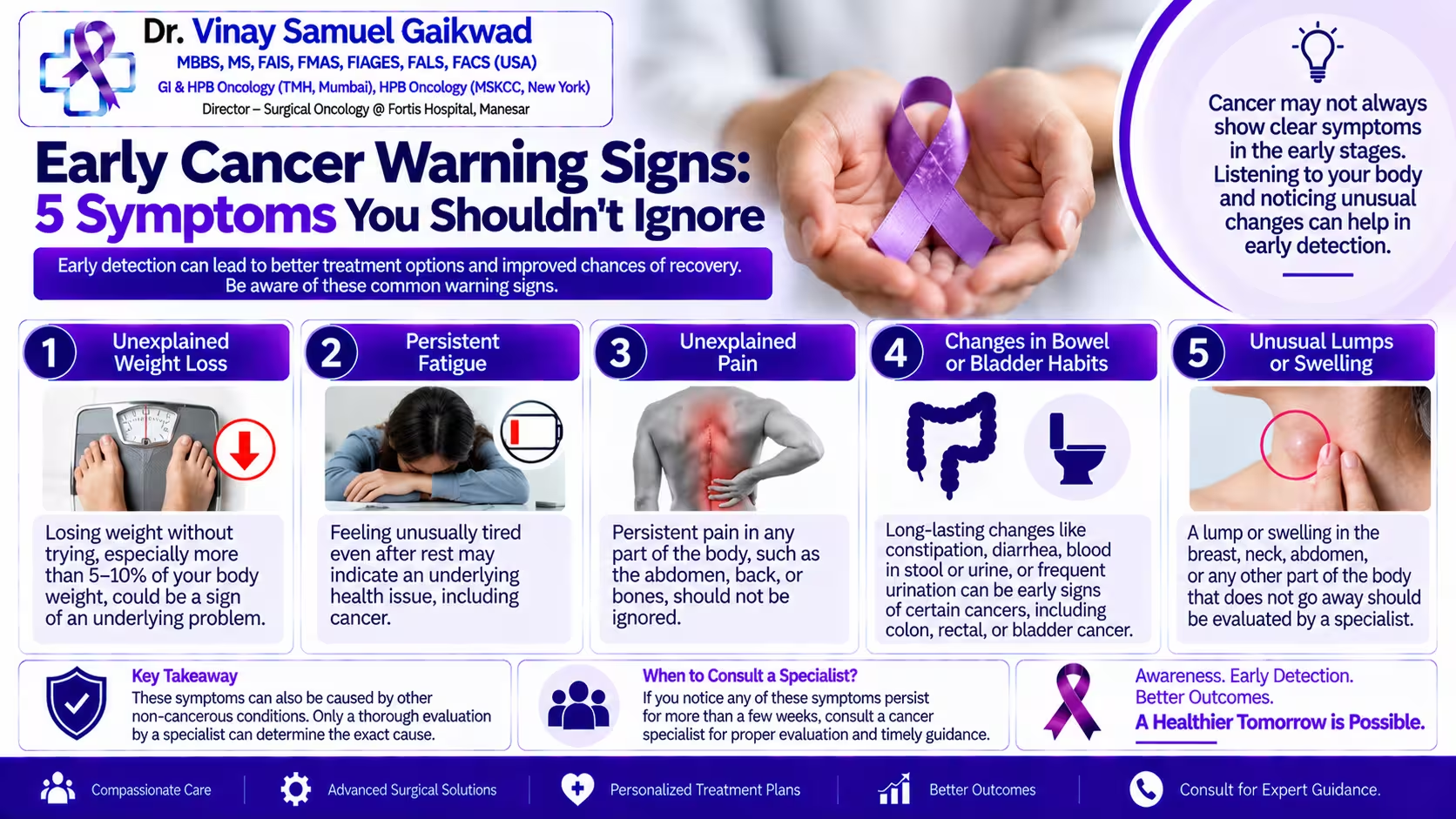
Early cancer warning signs include unexplained weight loss of 10 pounds or more, persistent fatigue that does not improve with rest, and unusual lumps or swellings in the body.
1. Losing Weight Without Trying
You may see changes in your body despite having no changes in your lifestyle. You may begin to see that your clothes have become baggy, notice a drop in your weight, or feel less hungry.
There may be various causes for this. Diseases such as thyroid problems, diabetes, digestive diseases, and stress can contribute to weight loss. The presence of cancer may be another factor leading to the loss of weight before other symptoms are noticed.
When a tumor is developing, the body utilizes energy in higher amounts. This process also impacts the appetite and nutrient absorption by the body. This results in losing weight despite normal food consumption. Some people tend to eat less due to the sensation of quick satiety.
Why be concerned? If you continue to lose weight for no apparent reason, especially if it is happening over the course of several weeks, talk to a doctor. It’s even more important that you seek medical attention if the unintentional weight loss is accompanied by poor appetite, stomach pain, change in bowel habits, and abnormal fatigue.
One should not make assumptions about the causes of sudden, unexplained weight loss. Some people assume that the weight loss is due to age, stress, or being very busy, and don’t see the need to investigate.
2. A New Lump or Swelling That Does Not Go Away
Cancers and other serious conditions can cause lumps in various parts of the body. New and/or growing lumps should not be ignored.
Lumps are common. They can be caused by infections, cysts, and other benign conditions. Often, lymph nodes in the neck will swell with an infection, and then shrink once the infection improves.
Cancer can also cause lumps. Breast cancers and infections can cause painless lumps. Enlarged lymph nodes from infections can also be painless. The absence of pain does not mean there’s nothing to worry about.
Observe whether a lump is increasing in size, becoming hard, and/or feeling fixed to one place. Lumps can be cancerous, benign, or caused by other conditions. Lumps themselves don’t always indicate cancer.
A new breast lump, a breast lump that continues to grow, or a swelling that doesn’t go away should be evaluated by a doctor. The doctor may recommend other tests such as a biopsy or other imaging to evaluate the lump.
A lump becoming painful doesn’t always mean it’s benign. Some benign lumps can also be painful. Likewise, some cancers don’t always cause pain.
3. Blood in the Stool, Urine or Other Unusual Bleeding
Bleeding in areas where it does not belong can often be very distressing. The reason may be insignificant, but any type of unexplained bleeding must always be looked into.
In case of blood in stool, for instance, the condition may arise due to piles or tearing around the anus following constipation. Nevertheless, the condition may indicate the presence of a serious illness affecting the colon or rectum, including colorectal cancer. Blood may be bright red, mixed with stool or darken the stool itself.
In case of blood in the urine, this symptom may arise due to a urinary infection or the presence of kidney or bladder stones. Blood in urine may also indicate bladder or kidney cancer in its early stages. Sometimes, blood may not be visible in the urine, but can be detected on tests.
Other bleeding that must be considered includes bleeding between periods, postmenopausal bleeding, and bleeding while coughing or from the nose with no apparent cause.
The crucial issue here is that seeing blood alone will not reveal whether there is cancer or not. It should be determined where the blood comes from by a physician.
One must not think that bleeding from the stool is always caused by piles, or that bleeding from the urine is always an infection. They should see a doctor for it even if it happens just once and does not occur again.
4. A Sore That Does Not Heal or a Change in the Skin
Small cuts, mouth ulcers, and skin sores normally take days to heal. If the sores keep on being open, do not heal, become large, or keep reappearing at the same place, they have to be treated.
Sores found in the mouth that have not healed even after two weeks have to be checked out, particularly if there are sores, reddish patches, white patches, hardness, bleeding, or inability to open the mouth. These could be symptoms of mouth cancer.
The same is true for sores in the skin. Any new growths that continue to grow bigger, sores that are not healing, or moles that keep changing in terms of their size or shape should be checked.
There are many non-malignant causes for the above symptoms, such as infection, injury, and skin disease. The matter is more serious when the problem remains or changes continually.
Those individuals who take gutka, khaini, or any other form of tobacco should be especially cautious of ulcers, lesions, or thickening of mucosal tissues within their mouth. As tobacco can cause mouth cancer, any change mustn't be ignored.
It can be a doctor or a dentist who will examine the site and determine whether or not a test is needed. In case of cancer, a biopsy may be suggested. It means removing the tissue for testing purposes.
5. A Change in Your Body That Keeps Coming Back
The warning signal may not necessarily come as a lump or visible sore. It could come through changes in the way your body works.
This includes a cough that does not go away, a hoarse throat, difficulty in swallowing, changes in bowel habits, or changes in urination frequency. In some cases, there is a feeling of pain that does not seem to have any reason.
There could be several reasons behind such symptoms. The cough could be a result of an infection, the hoarseness could be because of irritation, and the change in the bowels could be because of what one eats. The trouble lies in the fact that the symptom should not be ignored without knowing why it happens.
Here are some changes worth discussing with a doctor:
|
Change you notice |
What needs attention |
|
A cough that does not go away |
Especially if it comes with blood, chest pain or unexplained weight loss |
|
A voice that stays hoarse |
Particularly when it lasts for several weeks |
|
Difficulty swallowing |
Especially if it is getting worse or food feels stuck |
|
Changes in bowel habits |
Ongoing constipation, diarrhoea, narrower stools or blood in the stool |
|
Changes in urination |
Blood in the urine, difficulty passing urine or a lasting change in frequency |
|
Pain that does not settle |
New or persistent pain without a clear cause |
|
Tiredness that continues |
Especially with pale skin, breathlessness or unexplained bleeding |
The length of time that matters can vary according to the symptom. There is no need to wait several weeks if a problem is severe, getting worse or affecting everyday activities. Difficulty breathing, inability to swallow, heavy bleeding, or sudden severe pain may need urgent medical care.
Do These Five Symptoms Always Mean Cancer?
Certainly not! The aforementioned symptoms are very common, and the vast majority of individuals experiencing them do not necessarily have cancer. Infections, hormones, digestive diseases, and numerous other diseases may produce similar symptoms.
The thing is the pattern. Is it a new symptom? Is it getting worse? Did it persist for longer than it should have? Did some other unexpected changes appear simultaneously with the one in question?
For instance, an individual losing weight unintentionally and developing a lump should pay attention to both of the aforementioned symptoms. Also, bloody stools in conjunction with persistent changes in bowels should be properly diagnosed.
One does not have to get alarmed, but there is also no point in guessing what is going on and treating a symptom over and over again.
What Should You Do If You Notice a Warning Sign?
Firstly, you should have a medical visit and provide detailed information about changes you have noticed. You should specify when your symptom appeared, if it has worsened, and what other symptoms have arisen simultaneously.
The further action will vary depending on the symptom you are experiencing. Your doctor can examine the affected area, perform blood and urine tests, order imaging, or refer you for a consultation with a specialist. In case of unusual lumps or sores, a biopsy may be required.
Not all tests are required for each person. They are needed to establish the cause of the problem and not just to make sure that it is cancer.
It is also important to understand that some cancers do not cause any symptoms at an early stage. Screening tests that may detect cancer before you experience any symptoms are recommended for certain cancers. The list of tests to undergo depends on various factors.
Can Cancer Be Treated More Successfully When Found Early?
In most cases, early detection of the disease, when it has not developed or spread yet, makes its treatment more effective and increases the chances of successful treatment. There can be less aggressive treatment in some cases, but this will depend on the specific type and stage of the cancer.
Some cancers can be surgically removed if they have remained localized. Some cancers may require surgery, radiation, chemotherapy, and other types of treatment. In addition, some cancers require special drugs that take into account specific characteristics of the cells of that particular cancer.
No one treatment will be effective for any type of cancer. The first thing to do is to diagnose the disease and find out what stage it is at. This will help determine the most appropriate treatment.
Why Choose Dr. Vinay Samuel Gaikwad?
Dr. Vinay Samuel Gaikwad is a leading Surgical Oncologist in India with more than 20 years of experience in complex cancer surgeries. His special interests include gastrointestinal (GI) malignancies, hepatopancreatobiliary (HPB) cancers, colorectal cancers, pancreatic cancers, and minimally invasive and robotic cancer surgery.
Dr. Gaikwad's surgical oncology expertise is relevant when a patient requires assessment for cancer surgery, including selected GI and HPB cancers. The appropriate specialist and treatment plan depend on the suspected or confirmed diagnosis.
Concerned about a persistent symptom or a suspected cancer diagnosis? Consult Dr. Vinay Samuel Gaikwad for guidance on cancer surgery and the next steps in evaluation and treatment planning.
Related Treatments
For patients whose investigations confirm cancer, relevant services listed on Dr. Vinay Samuel Gaikwad's website include:
- Laparoscopic Colorectal Cancer Surgery
- Whipple Surgery
- Sphincter-Saving Surgery
- HIPEC Surgery
- Chemo Port Insertion
- Retroperitoneal Sarcoma Treatment
Related Articles
- Chemotherapy Cost in India: What You May Have to Pay
- Liver Cancer Symptoms: 10 Warning Signs You Should Not Ignore
- What Causes Colon Cancer? Risk Factors You Should Know
- What Are the Early Signs of Pancreatic Cancer?
- When Is Chemotherapy Needed for Cancer? A Complete Patient Guide
Conclusion
Cancer is not always caused by pain or by an illness. In some cases, a symptom that a person might experience as the onset of cancer may be weight loss, a lump, abnormal bleeding, a non-healing sore or a change in the way a body part works.
These symptoms don't necessarily mean that there is a case of cancer, and they could just as well be caused by normal reasons that can be fixed easily. However, it would be wise for one to find out the cause of such symptoms rather than wait to find out why the symptom occurred.
Dr. Vinay Samuel Gaikwad is a Surgical Oncologist with over 20 years of experience and assesses the various forms of cancer according to the patient's report and diagnosis.
FAQs
Is unexpected weight loss always a sign of cancer?
No. There can be several explanations for weight loss, such as problems with the thyroid or with diabetes, stress, and various digestive conditions. If the reason is not found despite the weight loss being significant, a medical check-up can be useful to identify a possible cause.
Is there a specific test to determine if someone has cancer?
No one test will identify the presence of all forms of cancer. Many tests can be carried out to establish the causes of the symptoms. In some cases, a sample of the tissues needs to be extracted for examination to establish whether there is cancer present. The procedure used to extract the tissues for examination is determined by the location of the suspected cancer in the body.
Can cancer be identified before symptoms are present?
Yes, certain cancers or the early stages of them can be identified with specific tests before symptoms are present. Not all cancers can be tested this way, and the appropriate tests would depend on a person's age, health history, and other risk factors.
What are the early signs of cancer?
People usually don't notice the first signs of cancer the same way. For some, it may be a lump, blood in their urine or stool, unwanted weight loss, a sore that doesn't heal, a change in their bowel habits, and unusual bleeding. Some cancers are usually ‘silent’. Symptoms may not show until the cancer is in an advanced stage.
How long should a symptom persist before it gets checked?
It depends on the symptom. If it’s a sore in the mouth that hasn’t healed in about 2 weeks, it should be checked. If blood is found in the stool or urine, it should be checked regardless of whether it happened only once. Usually, if a symptom worsens or gets severe, it should be checked sooner.
Can cancer be present without pain?
Definitely. Some cancers don’t cause any pain and may not be noticed until the cancer is at an advanced stage. Sometimes, the first sign of cancer may be a lump, a sore that doesn’t heal, or unusual bleeding.