
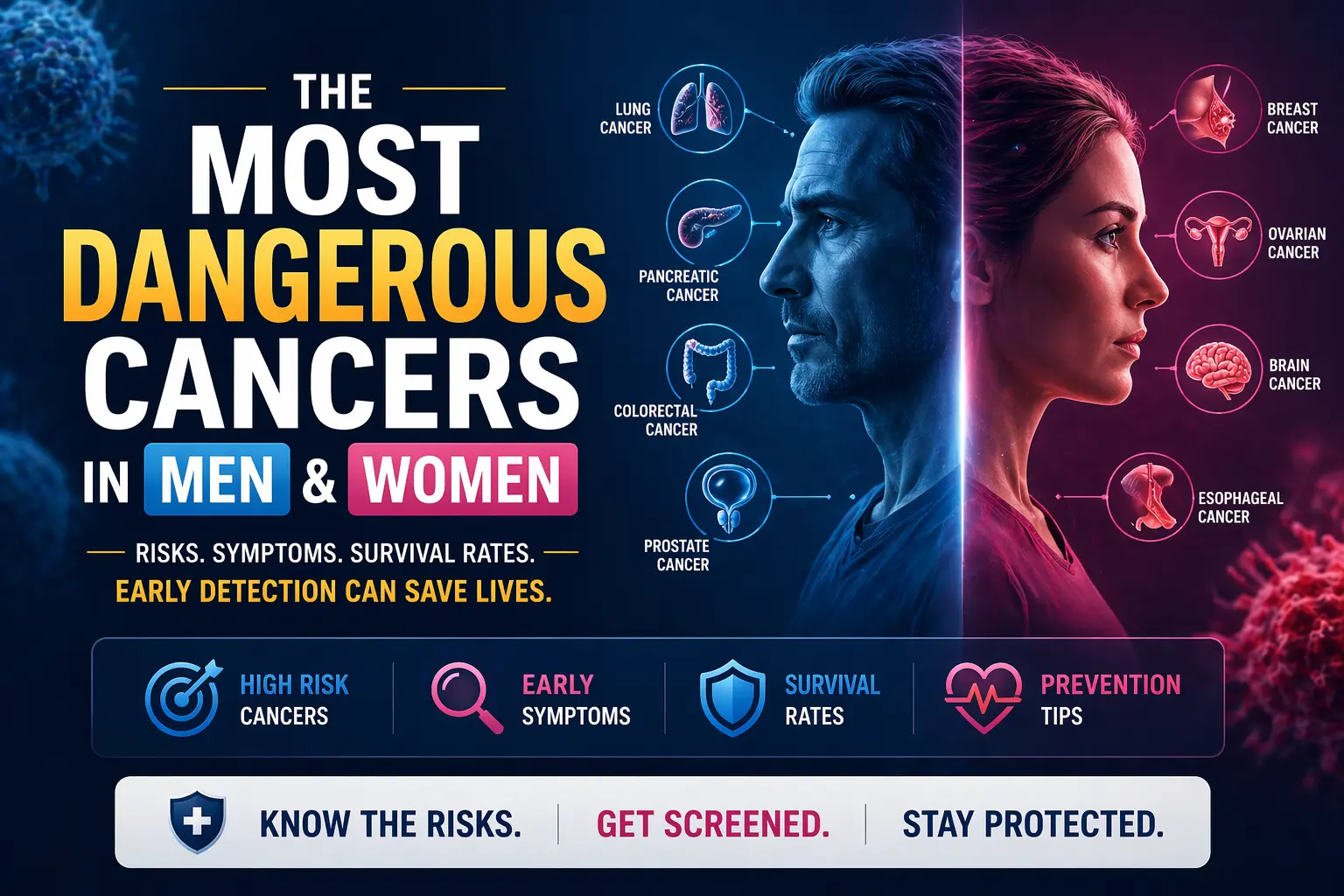
Cancer is one of the leading causes of death worldwide. While some cancers are treatable, others are highly aggressive and life-threatening—especially when diagnosed late. Understanding the most dangerous cancers in men and women can help with early detection and better survival outcomes.
Top Most Dangerous Cancers (With Survival Rates)
1. Lung Cancer (Highest Death Rate)
- Survival Rate: ~20%
- Why dangerous: Late detection, fast spread
- Common symptoms: Persistent cough, chest pain
2. Pancreatic Cancer (Lowest Survival Rate)
- Survival Rate: ~10%
- Why dangerous: No early symptoms
- Symptoms: Weight loss, jaundice
3. Liver Cancer
- Survival Rate: ~20%
- Why dangerous: Linked to chronic diseases
- Symptoms: Abdominal swelling, fatigue
4. Colorectal Cancer
- Survival Rate: ~60%
- Why dangerous: Silent in early stages
- Symptoms: Blood in stool, bowel changes
5. Breast Cancer
- Survival Rate: ~90% (early detection)
- Why dangerous: Can spread if untreated
6. Prostate Cancer
- Survival Rate: ~95%
- Why dangerous: Can become aggressive
7. Brain Cancer
- Survival Rate: ~30%
- Why dangerous: Affects vital functions
8. Esophageal Cancer
- Survival Rate: ~20%
- Why dangerous: Late symptoms
What Makes a Cancer Dangerous?
1. Late Diagnosis
Symptoms appear only in advanced stages
2. Rapid Spread (Metastasis)
Cancer spreads quickly to other organs
3. Treatment Resistance
Some cancers stop responding to therapies
4. Lack of Screening Tests
Early detection becomes difficult
Quick Comparison Table
| Cancer Type | Survival Rate | Risk Factor |
|---|---|---|
| Lung | ~20% | Smoking, pollution |
| Pancreatic | ~10% | Late detection |
| Liver | ~20% | Hepatitis, alcohol |
| Breast | ~90% | Hormonal, genetic |
| Prostate | ~95% | Age-related |
Which Is the Most Dangerous Cancer?
There is no single answer, but:
- Pancreatic cancer → Lowest survival
- Lung cancer → Highest deaths
- Brain cancer → Most complex
The “worst cancer” depends on stage, spread, and treatment response.
How to Reduce Cancer Risk
- Avoid tobacco & alcohol
- Maintain a healthy diet
- Exercise regularly
- Get regular screenings
- Vaccination (HPV, Hepatitis B)
Conclusion
Understanding the most dangerous cancers helps in early detection and prevention. While some cancers remain difficult to treat, advancements in oncology are improving survival rates every year.
For accurate diagnosis and treatment planning, consult an experienced oncologist early—timely action can save lives.