
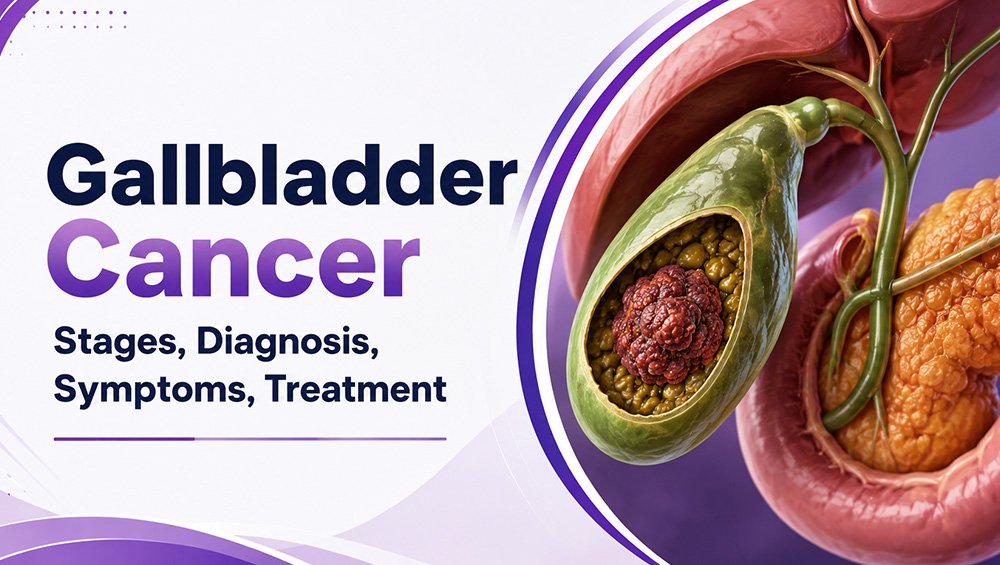
Gallbladder Cancer is a rare but aggressive cancer that begins in the gallbladder. It is the smallest organ below the liver. It assists in the digestion of food. Gallbladder cancer is uncommon; however, it is extremely dangerous. It's usually diagnosed later than usual since the early signs aren't specific and are similar to other conditions of the gallbladder, like gallstone disease.
An evaluation that is done by a doctor on time is crucial since a delay in diagnosis can limit the treatment options. Anyone aware of the phases of illness, the diagnostic methods, and treatment options could make better decisions regarding their medical treatment.
What is Gallbladder Cancer?
Gallbladder Cancer is a condition that occurs when abnormal cells start growing uncontrollably within the gallbladder. The condition is more prevalent among older people and is more frequent among women than men.
Gallbladder cancer is often detected accidentally when a gallstone patient undergoes an operation. Sadly, many patients are diagnosed only after the cancer cells have invaded the body regionally or even at distant sites.
In a few people, it is possible to detect gallbladder cancer by accident during surgery to remove gallstones. But cases that are advanced may be spread to other organs, like the liver, the bile ducts, or lymph nodes.
Symptoms of Gallbladder Cancer
The signs and symptoms of gallbladder cancer might not manifest until the beginning stages. As the cancer progresses, patients can experience a variety of warning symptoms.
Common Signs of Gallbladder Cancer
- Persistent pain in the upper right abdomen
- Nausea and vomiting
- Appetite loss
- Unexplained weight loss
- Fever
- The skin is becoming yellow or the eyes (jaundice)
- The abdominal area is swelling or bloating.
- Urine that is dark
- Insomnia and fatigue
A number of these signs can be due to gallstones, infections, or other conditions. That is why a thorough examination is essential.
Signs of Gallbladder Cancer That Should Not Be Ignored
Certain symptoms could indicate the presence of an advanced illness and warrant immediate medical care.
Warning Signs Include:
- Consistent abdominal discomfort
- The appearance of a lump within the abdomen.
- Very severe jaundice
- Continuous vomiting
- Weight loss that is sudden and without cause
- Extreme tiredness
If the symptoms persist for longer than a couple of weeks, a medical examination is necessary.
Causes and Risk Factors
The exact cause of gallbladder cancer is not always known, but certain factors can increase the risk.
Common Risk Factors
|
Risk Factor |
Explanation |
|
Gallstones |
Long-term gallstones can irritate the gallbladder lining |
|
Chronic inflammation |
Ongoing inflammation may increase cancer risk |
|
Age |
More common in older adults |
|
Gender |
Women are affected more often |
|
Obesity |
Excess weight may increase gallbladder disease |
|
Family history |
Some people may have a higher genetic risk |
|
Gallbladder polyps |
Large polyps may become cancerous |
Stages of Gallbladder Cancer
The doctors divide gallbladder cancer into stages, based on the extent to which the cancer has spread.
Stage 0
Gallbladder cancer has been detected only in the mucosal layer of the gallbladder without invading further depths or spreading out of the gallbladder.
Stage 1
The cancer has spread into the gallbladder wall, remaining confined to the gallbladder. This stage provides surgery with a good prospect for the cure of the disease.
Stage 2
The cancer grows further into the surrounding tissue near the gallbladder. At this stage, the condition of the patient requires complicated medical treatment.
Stage 3
In this stage, cancer metastasizes either to the lymph nodes or the surrounding organs, such as the liver, along with other symptoms of the disease.
Stage 4
It is the most severe stage in which cancerous cells spread from the initial site of the disease to other parts of the body, such as the lungs, liver, or abdomen.
Gallbladder Cancer Diagnosis
Diagnosing gallbladder cancer often involves multiple tests because the symptoms can resemble other digestive diseases.
Tests Used for Diagnosis
|
Test |
Purpose |
|
Ultrasound |
Detects abnormalities in the gallbladder |
|
CT Scan |
Shows tumor size and spread |
|
MRI Scan |
Gives detailed images of bile ducts and nearby tissues |
|
Blood Tests |
Checks liver function and tumor markers |
|
Biopsy |
Confirms cancer cells under a microscope |
|
PET Scan |
Detects cancer spread in the body |
Doctors may also perform additional imaging tests to understand whether surgery is possible.
Treatment for Gallbladder Cancer
The treatment depends upon the severity of cancer and general health, and if the cancer has been able to spread.
1. Surgery
Surgery is the most common treatment for gallbladder cancer that is in its early stages.
Some types of surgery include:
- The gallbladder is removed
- Removal of a portion of the liver
- Removal of lymph nodes that are nearby
- Surgery for advanced cancer in a few instances
If it is detected early enough, if caught early, surgery may provide the greatest chances of recovery.
2. Chemotherapy
Chemotherapy makes use of medicines to destroy cancerous cells. It can be administered:
- Following surgery, to decrease the chance of recurrence
- Before surgery, to reduce tumors
- For advanced cancers, to treat the symptoms
3. Radiation Therapy
Radiation therapy makes use of high-energy radiation to kill cancerous cells. It could aid in:
- Reduce the amount of pain
- The ability to control the growth of tumors
- Reduce the risk of recurrence
4. Targeted Therapy and Immunotherapy
In a few cases that are more advanced doctors might use more advanced treatments to specifically target cancerous cells, or help your immune system to fight off cancer.
Gallbladder Cancer Prognosis
The prognosis of gallbladder cancer is based on a variety of aspects, including:
- Stages of cancer
- The size of the tumor
- If surgery is a possibility
- The lymph nodes and liver
- Health of the overall patient
Early-stage cancers generally have better outcomes than advanced-stage cancers.
Gallbladder Cancer Survival Rate
The gallbladder cancer survival rate varies depending on how early the disease is diagnosed.
|
Stage |
Approximate Survival Outlook |
|
Early-stage cancer |
Better survival chances after surgery |
|
Locally advanced cancer |
Moderate survival depending on treatment response |
|
Metastatic cancer |
Lower survival rate due to the spread |
Early detection plays a major role in improving survival outcomes.
Can Gallbladder Cancer Be Prevented?
There is no sure way to prevent gallbladder cancer; however, there are some ways that help in reducing the risks of developing it.
Tips for Prevention
1. Keep your weight within a healthy limit
2. Eat a healthy diet consisting of plenty of fruits and vegetables
3. Remove gallstones if symptoms become serious
4. Do not smoke
5. Exercise regularly
Undergo medical examinations if you suffer from chronic gallbladder disease
When Should You See a Doctor?
It is recommended to consult with a physician for:
- Chronic abdominal discomfort
- Repeated digestive problems
- Unexplained weight loss
- The eyes become yellow, or the skin
- Gallstones are a long-term symptom
Early medical attention can help identify issues before they get more serious.
Conclusion
Gallbladder cancer is a serious condition, but recognizing the warning signs early can make a big difference. Symptoms like ongoing abdominal pain, jaundice, unexplained weight loss, or persistent digestive problems should never be ignored. Since the disease is often diagnosed at a later stage, getting medical attention early can help improve treatment options and outcomes.
If you have symptoms that don’t go away or a history of gallbladder-related problems, it’s a good idea to speak with a specialist. An experienced doctor can help identify the cause of your symptoms and guide you toward the right treatment. Dr. Vinay Samuel Gaikwad, known as one of the best oncologist surgeons in India, has extensive experience in treating complex gastrointestinal and hepatobiliary cancers and is committed to providing personalized care for every patient.