
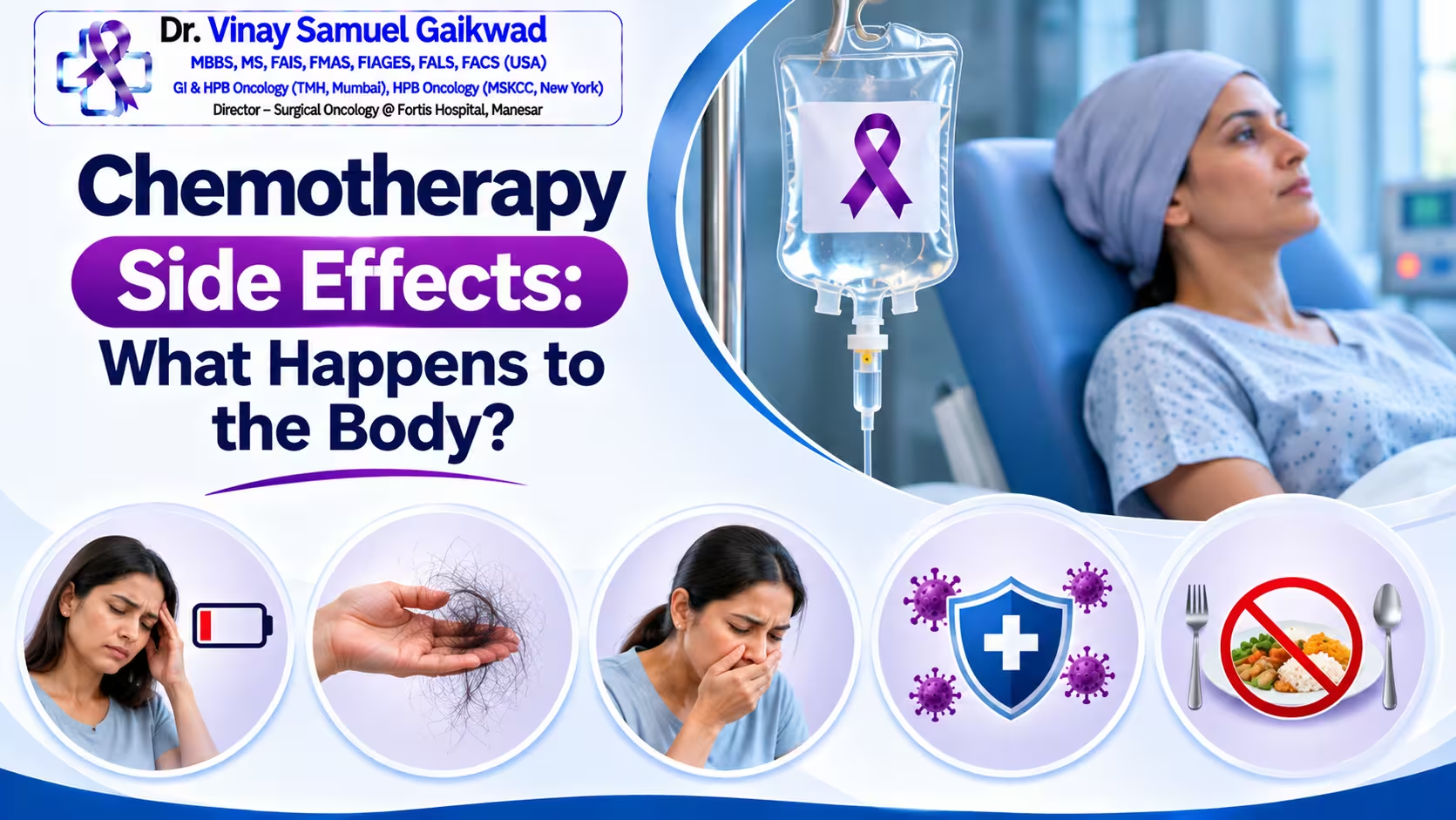
Chemotherapy side effects happen because anti-cancer drugs target fast-growing cells, which includes healthy cells in the blood, digestive tract, mouth, and hair follicles. What you experience depends on the specific drugs, dose, treatment schedule, and your overall health.
Why Does Chemotherapy Cause Side Effects?
Chemotherapy drugs target cells that grow and reproduce rapidly. This is the case in cancerous cells, but there are also healthy cells in the body that reproduce rapidly.
This includes bone marrow cells, oral mucosa, gastrointestinal tract, hair follicles, and skin cells. Any damage caused by chemotherapy in these areas results in various side effects.
Some of these may be caused by damage to bone marrow, leading to a decrease in blood cells, whereas others could arise from the gastrointestinal tract, such as vomiting and mouth ulcers.
How Does Chemotherapy Affect Different Parts of the Body?
1. Blood and Immune System
Bone marrow is the soft tissue inside bones that produces blood cells, called platelets and white blood cells as well as red blood cells. Chemotherapy, or other similar types of treatments, can slow down or even stop this process for a period of time. This can then cause three problems.
- Low White blood cells: Being less able to fight infections is called neutropenia.
- Anaemia: Weakness, tiredness, dizziness, and shortness of breath can all occur because of a lack of red blood cells.
- Low platelets: Blood does not clot properly and can cause easy bruising, nosebleeds, or bleeding gums.
Doctors will monitor blood counts often with chemotherapy, and if any of the numbers get too low they may change or stop treatment all together.
2. Digestive System
The cells that line the mouth, stomach, and intestine are fast-turning over. So chemotherapy can affect these cells and cause many problems with eating and digestion.
Some changes include:
- Nausea and vomiting: Some chemo medicines are harsh on the digestive system and cause nausea. Medicine can stop or ease nausea.
- Mouth sores: Painful ulcers can develop on the inside of the mouth and throat, making eating and swallowing very unpleasant.
- Altered taste: Food can taste very different, like bitter or metallic.
- Diarrhea: Constant and severe cases of diarrhea can develop from damage to the lining of the intestine.
- Constipation: Medicines for nausea can cause constipation.
Rapid or severe loss of fluids from vomiting or diarrhea can be dangerous. It's best to tell the care team about the symptoms instead of trying to cope with them alone.
3. Skin, Hair, and Nails
People often associate hair loss with chemotherapy. One of the reasons is that some medicines damage cells in the hair roots, which causes hair to thin and sometimes fall out.
Hair loss can happen on the scalp and other areas, including the eyebrows and eyelashes. Usually, it takes a few weeks after the start of treatment for hair to fall out. Hair grows back after chemotherapy, but sometimes its color or texture is different.
Dry and itchy skin, dark spots, increased sensitivity to the sun, brittle nails, and changes in nail color are other changes that can happen because of chemotherapy.
Some medicines don’t cause hair loss. The doctor who is planning the treatment can explain what is expected.
4. Nervous System and Brain
Certain chemotherapy medicines can affect the nerves, particularly those in the hands and feet. This is called peripheral neuropathy.
A person may notice:
- Tingling or a pins-and-needles feeling.
- Numbness in the fingers or toes.
- Burning or unusual pain.
- Weakness or difficulty holding objects.
- Problems with balance or walking.
Some patients also experience changes in memory and concentration. This is commonly called chemo brain. They may find it difficult to remember small details, focus on a task, or find the right words.
These problems can improve after treatment, but nerve-related symptoms sometimes last longer. Report them early because the doctor may need to review the medicine or dose.
5. Extreme Tiredness and Weakness
Chemotherapy fatigue is different from usual fatigue. People feel exhausted despite being well-rested or asleep. Simple activities like walking, preparing meals, and climbing stairs become hard for them.
Anemia, lack of sleep, nausea, low appetite, and reaction of the body to treatment could lead to fatigue.
Doctors need to be notified by patients who experience fatigue that interferes with their daily routine. Blood test results will show if a person suffers from anemia or another health condition.
6. Fertility and Hormonal Changes
Some chemotherapy drugs may target the ovaries and testicles, thus reducing egg and sperm production, respectively, and affecting your ability to conceive a child.
Women could notice menstrual cycle disorders and premature menopause, while men could observe abnormalities in sperm production and sexual functioning. Whether the effect will be temporary or not depends on the drugs used, the dosage, and the age of the person treated.
Anyone planning to conceive a child in the future needs to consult their oncologist about preserving fertility before starting chemotherapy treatment.
7. Effects on Other Organs
Some chemotherapeutic drugs may cause damage to internal organs like the heart, kidneys, liver, or lungs. Such reactions do not occur with all chemotherapeutic drugs, but they need to be taken into account in the course of the treatment.
The specific reactions associated with each drug may be changes in the work of the heart, kidney failure, irritation of the liver, and lung inflammation.
The doctors may decide to conduct blood test or heart test and other investigations.
Are Chemotherapy Side Effects Permanent?
The majority of side effects will improve once the chemotherapy is over because the body’s healthy cells will start regenerating again.
Nevertheless, the time that is required for recovery varies. Nausea, changes in appetite, and certain skin conditions will heal rather fast. It may take several months for the hair to start growing back. Damage to the nerves, fertility issues, or organ-specific side effects may take longer.
It is dependent on the kind of drugs used and the dosage.
When Should a Patient Contact the Doctor?
Some side effects can be managed at home with medicines and simple changes in daily routine. Others need urgent medical attention.
Contact the cancer care team immediately if there is:
- Fever of 38°C or higher.
- Shaking chills or signs of infection.
- Unusual or heavy bleeding.
- Severe or repeated vomiting or diarrhoea.
- Difficulty breathing or chest pain.
- Sudden swelling of the face or throat.
- Severe weakness, confusion, or fainting.
Fever during chemotherapy can be a sign of a serious infection, especially when white blood cell counts are low. Do not wait for it to settle on its own or take fever medicines before speaking to the care team.
Understanding Chemotherapy and Its Side Effects With Dr. Vinay Samuel Gaikwad
Dr. Vinay Samuel Gaikwad is an experienced Surgical Oncologist in India with over 20 years of experience in complex cancer surgeries. He has an MCh in Surgical Oncology and has received advanced training at Tata Memorial Hospital, Mumbai. He has also received international training at Memorial Sloan Kettering Cancer Center, New York, and IRCAD Taiwan. His areas of expertise include gastrointestinal cancers, hepatopancreatobiliary cancers, minimally invasive cancer surgery, and robotic cancer surgery.
Cancer treatment decisions depend on the type of cancer, its stage, the extent of disease, and the patient's overall health. Dr. Vinay Samuel Gaikwad evaluates each patient's clinical condition and reports to help determine the appropriate surgical options and treatment approach. When required, treatment planning may involve a multidisciplinary team to provide comprehensive cancer care.
Related Treatments
Conclusion
Side effects of chemotherapy include the effects it causes on many other organs besides the affected organ since it also affects normal cells. These side effects include hair loss, nausea, low blood cell levels, ulcers in the mouth, fatigue, and nerve effects, among others. The occurrence and severity of these symptoms vary from patient to patient.
This is where Dr. Vinay Samuel Gaikwad, who is a surgical oncologist and has been practicing for over 20 years, comes in handy to help you comprehend your cancer treatment and its possible side effects.
Frequently Asked Questions
1. Does everyone experience hair loss during chemotherapy?
No. Hair loss is dependent upon the chemotherapy drugs that are being administered. While some individuals will experience hair loss, other individuals will experience hair thinning only. Most often, hair regrows after chemotherapy.
2. Why do some individuals experience fatigue during chemotherapy?
Fatigue is one of the major side effects of chemotherapy. Fatigue is caused by low counts of red blood cells, lack of appetite, disruption of sleep patterns, and physical strain due to the effects of chemotherapy.
3. Is nausea and vomiting a consequence of every chemotherapy treatment?
No. Not every patient experiences nausea after every chemotherapy treatment. It depends on the specific drugs used for the procedure. Doctors can prescribe preventive drugs to be taken before or after chemotherapy to prevent or reduce nausea and vomiting.
4. Why do hands and feet feel numb during chemotherapy?
Some specific drugs can affect the body’s nervous system in such a way that tingling and numbness of hands and feet can occur. These symptoms need to be reported to the patient's doctor.
5. How long do the effects of chemotherapy last?
No. The presence of more serious side effects doesn’t mean that the chemotherapy has been more successful. There can be cases when chemotherapy works to control or slow down cancer development without causing any side effects.