
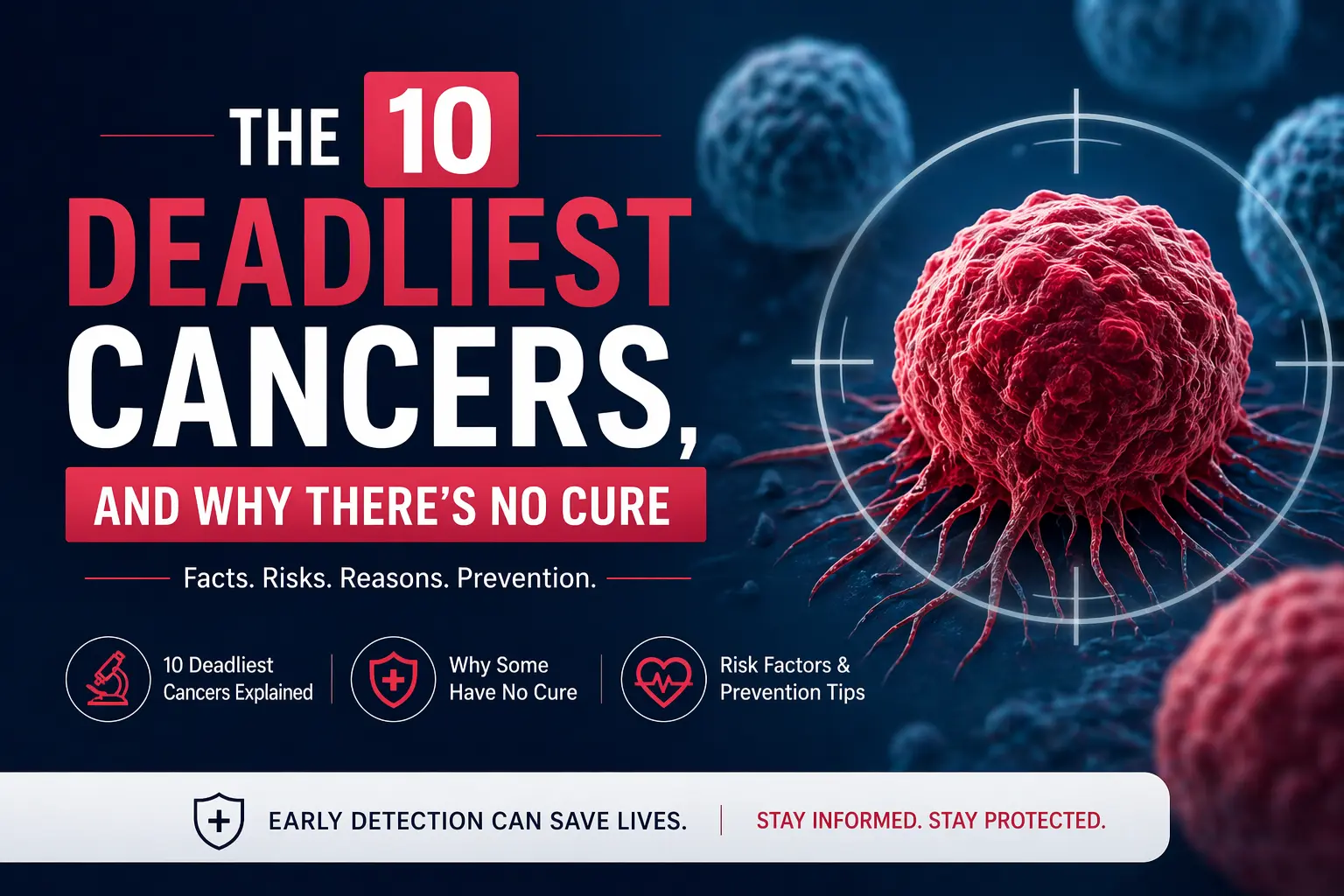
Cancer remains one of the leading causes of death worldwide. While many cancers are treatable when detected early, some are highly aggressive and difficult to cure. These are often referred to as the deadliest cancers due to their rapid spread, late diagnosis, and resistance to treatment.
Top 10 Deadliest Cancers (Explained)
1. Lung Cancer (Most Deadly Cancer)
- Leading cause of cancer deaths globally
- Often diagnosed late
- Strongly linked to smoking
2. Pancreatic Cancer
- Very low survival rate
- Rarely detected early
- Spreads rapidly
3. Liver Cancer
- Linked to Hepatitis B & C
- Common in advanced liver disease
- Aggressive progression
4. Colorectal Cancer
- Treatable if detected early
- Deadly in advanced stages
5. Stomach Cancer
- Symptoms appear late
- Often ignored as acidity
6. Breast Cancer (Advanced Stage)
- High survival if detected early
- Becomes dangerous when it spreads
7. Esophageal Cancer
- Causes difficulty swallowing
- Usually diagnosed late
8. Brain Cancer
- Affects vital functions
- Some types grow very fast
9. Ovarian Cancer (Silent Killer)
- Symptoms are vague
- Diagnosed at later stages
10. Blood Cancer (Leukemia)
- Affects blood and bone marrow
- Some types progress rapidly
Why Some Cancers Have No Cure
1. Cancer is Not a Single Disease
There are over 100 types of cancer, each behaving differently.
2. Late Detection
Many deadly cancers show no early symptoms.
3. Rapid Spread (Metastasis)
Cancer spreads to other organs quickly.
4. Treatment Resistance
Some cancers stop responding to chemotherapy or radiation.
5. Complex Cell Behavior
Cancer cells can hide from the immune system.
How to Reduce Cancer Risk
- Quit smoking and tobacco
- Maintain a healthy diet
- Exercise regularly
- Get regular screenings
- Take vaccines (HPV, Hepatitis B)
Conclusion
Understanding the deadliest cancers helps in early detection and better survival chances. While not all cancers are curable, medical advancements are improving outcomes every year.
If you experience unusual symptoms, consult a qualified oncologist early—timely diagnosis can save lives.